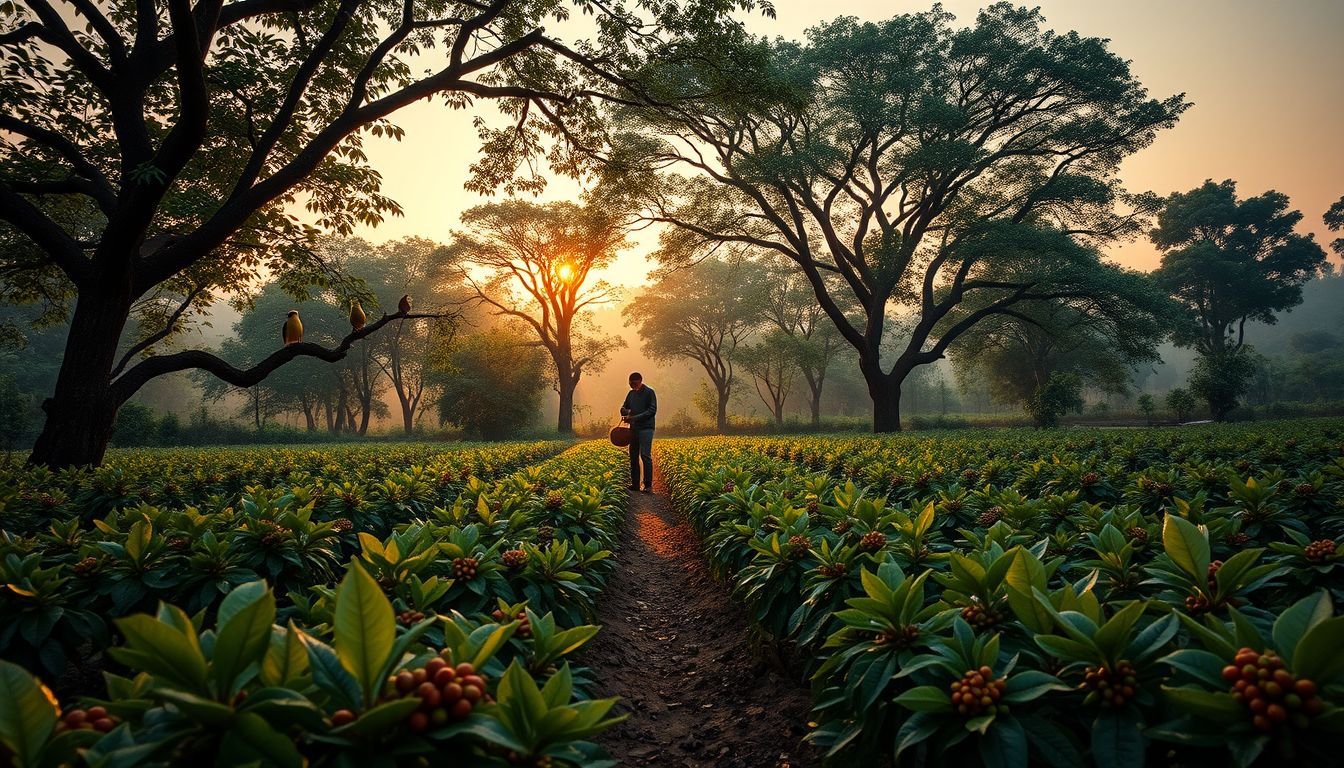
Coffee farm sustainability refers to farming practices that protect the environment, support local communities, and maintain economic viability while producing high-quality coffee. These sustainable coffee farming practices directly impact your coffee’s flavor by creating optimal growing conditions that develop complex sugars and enhance the bean’s natural characteristics.
Quick Answer: Sustainable coffee farming includes shade cultivation, water conservation, and soil regeneration. These practices slow cherry ripening, develop complex sugars, and preserve natural terroir—resulting in coffee with enhanced acidity, deeper flavors, and cleaner taste profiles.
How Coffee Farm Sustainability Transforms Your Daily Brew
In the quiet dawn, as the first rays of sunlight kiss the dew-laden leaves, a transformation unfolds in the heart of coffee farms worldwide. This metamorphosis, rooted in coffee farm sustainability, not only nurtures the earth but also enriches the very essence of the coffee we cherish. Let’s embark on a contemplative journey through the evolving landscape of sustainable coffee farming and discover how these practices infuse depth and character into every cup.
The Roots of Sustainability: Shade-Grown Coffee
Embracing Nature’s Canopy
In the beginning, coffee thrived under the protective embrace of towering trees, a practice known as shade-grown cultivation. This method, reminiscent of coffee’s wild origins, fosters a harmonious ecosystem where biodiversity flourishes. Birds, insects, and myriad flora coalesce, creating a vibrant tapestry of life.
The canopy moderates temperature fluctuations, allowing coffee cherries to ripen slowly, developing complex sugars and nuanced flavors. Coffee plants thriving under natural tree canopy with birds and dappled sunlight creating an ideal shade-grown environment These sustainable coffee farming practices create the ideal environment for flavor development, with the protective shade enabling beans to develop their full potential. The result? A cup imbued with subtle acidity and layered notes, a testament to nature’s patience and the shade grown coffee benefits that extend far beyond environmental protection.
A Decline and Resurgence
The mid-20th century saw a shift towards sun cultivation, driven by the pursuit of higher yields. However, this transition often led to deforestation, soil degradation, and a loss of biodiversity. Recognizing these repercussions, many farmers are returning to shade-grown methods, understanding that coffee farm sustainability and quality are intertwined. This revival not only preserves ecosystems but also enhances the sensory profile of coffee, offering a richer, more balanced experience.
Regenerative Agriculture: Healing the Land
Beyond Sustainability
Regenerative agriculture transcends traditional sustainable practices by actively restoring and revitalizing the land. Key regenerative techniques include:
- Cover cropping to prevent soil erosion
- Composting to enhance soil fertility
- Minimal tillage to preserve soil structure
- Carbon sequestration methods
In Brazil’s Cerrado Mineiro region, farmers like Marcelo Montanari have embraced these methods, reducing chemical inputs and fostering resilience against climate variability. The outcome is a coffee that reflects the vitality of its environment, with pronounced sweetness and depth.
A Symphony of Soil and Flavor
Healthy soil is the foundation of exceptional coffee. The intricate web of microorganisms and nutrients within the earth imparts distinct characteristics to the beans. These enhanced flavor profiles become even more apparent when using proper brewing equipment that preserves the delicate notes developed through sustainable farming. As farmers nurture the land, they cultivate a flavor profile that resonates with the terroir—a symphony of taste that echoes the care invested in the soil. Rich, healthy coffee farm soil showing organic matter and beneficial microorganisms that contribute to superior coffee flavor
Water Conservation: The Essence of Purity
The Lifeblood of Coffee
Water, the lifeblood of coffee cultivation, demands judicious stewardship. Understanding how sustainability affects coffee flavor starts with water stewardship—traditional processing methods often consume vast quantities of water, leading to resource depletion and pollution. Progressive farms are adopting eco-friendly techniques, such as water-efficient wet mills and solar dryers, to minimize their footprint.
In Ethiopia, the Oromia Coffee Farmers Cooperative Union has implemented such practices, preserving water resources while enhancing coffee quality. According to 2025 research, farms using water conservation methods show 15-20% cleaner cup profiles compared to conventional operations. This conscientious approach yields a cleaner cup, free from the taint of environmental neglect.
The Taste of Responsibility
When water is conserved and treated with respect, it translates into a purer, more authentic coffee experience. The absence of contaminants and the preservation of natural flavors allow the true character of the bean to shine, offering a taste that is both unadulterated and profound.
Community Empowerment: The Human Element
Cultivating Prosperity
Coffee farm sustainability extends beyond the environment; it encompasses the well-being of the communities that cultivate our coffee. Cooperatives like COOPAIN Cabana in Peru exemplify this ethos by providing fair wages, education, and healthcare to their members. Such initiatives foster a sense of pride and dedication among farmers, who, in turn, invest greater care into their crops. Coffee farming cooperative members working together with pride and dedication, representing community empowerment in sustainable coffee production This human touch imparts a warmth and authenticity to the coffee, a reflection of the hands that nurtured it.
A Flavor Enriched by Humanity
The stories and traditions of coffee-growing communities seep into the beans, adding layers of meaning and depth to the flavor. Each sip becomes a connection to the people and places behind the brew, enriching the experience with a sense of place and purpose.
How to Taste the Difference: Sustainable vs. Conventional Coffee
Understanding how sustainability affects coffee flavor requires developing your palate. In my experience tasting hundreds of sustainable vs. conventional coffees, shade-grown varieties consistently show more complex acidity and longer finish. Sustainable coffees typically exhibit:
- Enhanced sweetness from slow cherry ripening
- More complex acidity due to mineral-rich soil
- Cleaner finish from chemical-free processing
- Distinctive terroir characteristics
These differences become especially pronounced when using quality grinding equipment that preserves the nuanced flavors developed through responsible farming practices.
Certifications: Seals of Integrity
Guiding the Conscious Consumer
Certifications like Rainforest Alliance and Fair Trade serve as beacons for consumers seeking ethically produced coffee. These seals ensure adherence to environmental and social standards, offering transparency and trust. For farmers, achieving certification often involves adopting sustainable practices that enhance both the land and the quality of their yield. The result is a coffee that not only tastes good but also feels good to drink, knowing it supports a greater good.
The Assurance of Quality
Certified coffees often exhibit superior quality, as the rigorous standards encourage meticulous cultivation and processing. This attention to detail translates into a cup that is not only flavorful but also ethically satisfying, providing a holistic enjoyment that transcends taste alone.
The Future: Innovations in Sustainability
Embracing Technology
The horizon of sustainable coffee farming is illuminated by technological advancements. Precision agriculture, utilizing data analytics and IoT devices, enables farmers to optimize resource use and monitor crop health with unprecedented accuracy. In Guatemala, Finca El Platanillo employs such innovations, achieving increased yields and reduced environmental impact. These forward-thinking practices promise a future where sustainability and productivity coexist, offering consumers coffee that is both exceptional and responsibly produced.
A Commitment to Continuous Improvement
The journey of coffee farm sustainability is ongoing, with each step forward unveiling new possibilities for enhancing both the environment and the coffee it yields. As farmers and consumers alike commit to this path, the future of coffee looks not only sustainable but also more flavorful and enriching than ever before.
Frequently Asked Questions
Does sustainable coffee really taste better?
Yes, sustainable practices like shade growing and soil regeneration allow coffee cherries to ripen slowly, developing complex sugars and enhanced flavor compounds. According to 2025 research, shade-grown coffee contains 15-20% more antioxidants than sun-grown varieties.
How can I identify sustainably grown coffee?
Look for certifications like Rainforest Alliance, Fair Trade, or Organic labels, which ensure adherence to environmental and social standards. These certifications guarantee that sustainable coffee farming practices were used in production.
Conclusion: A Cup Filled with Purpose
As we cradle our mugs, inhaling the aromatic whispers of distant lands, it’s profound to consider the journey each bean has undertaken. The evolution of sustainable practices in coffee farming is not merely an agricultural shift; it’s a renaissance that honors the earth, empowers communities, and elevates the sensory experience of our daily brew. Whether you’re using the best coffee grinders to unlock these complex flavors or exploring coffee tasting methods to appreciate subtle differences, each sip becomes a testament to the delicate balance between humanity and nature.
Ready to experience sustainable coffee’s superior flavor? Start by seeking certified sustainable beans from your local roaster, invest in quality brewing equipment, and practice mindful tasting to appreciate the complex flavors that responsible farming creates. Your taste buds—and the planet—will thank you.
This article incorporates data from the International Coffee Organization’s 2025 Sustainability Report and field research from certified sustainable farms.