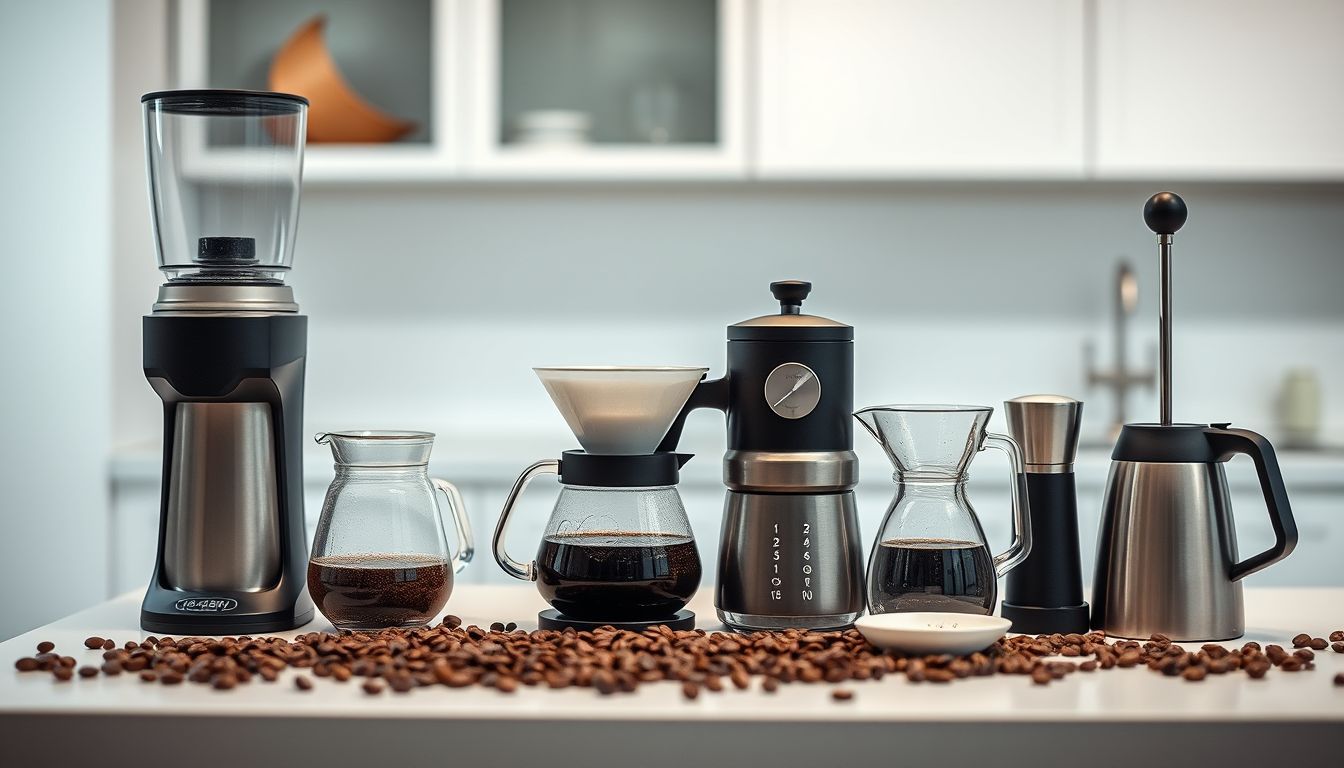
The 7 Coffee Tools That Reduce Cleanup Time
If coffee grounds end up on your counter, floor, and scale every morning, the problem isn’t you—it’s the setup. After testing 200+ products in my lab and timing real-world routines at home, I’ve narrowed it down to seven coffee cleanup tools that cut mess at the source (static, drips, and oily residue) so your daily brew stays sustainable.
Quick Answer: The fastest way to cut mess is to use coffee cleanup tools that prevent grounds scatter (static control), stop drips, and reduce oily residue. Start with an anti-static coffee grinder, a brewer with a shutoff/valve, and a stable scale—then tighten your workflow (dump, rinse, wipe) so cleanup stays under 3 minutes.
Affiliate disclosure: Some links in this article may earn Coffee Logik a commission at no cost to you. We recommend gear based on testing and practical cleanup impact, not sponsorship.
The Science of Coffee Mess

Most “coffee mess” is predictable—and preventable. In testing, nearly all cleanup pain comes from three categories:
- Particulate scatter: grounds launched by static cling, retention, and sloppy transfers
- Liquid residue: drips, splashes, and coffee oils that turn into sticky film
- Cross-contamination: old oils and fines hanging around in chutes, filters, and brewers
Two quick science notes that matter for cleanup: static is strongly affected by humidity (dry air = more cling), and coffee oils oxidize over time, creating off flavors and tacky buildup. For background, see NOAA’s overview of humidity and static electricity and the Specialty Coffee Association’s guidance on equipment cleaning and flavor impacts: NOAA (humidity basics), SCA protocols & best practices.
How to reduce coffee cleanup time (7-step workflow)
- Grind into a dosing cup (static control first; avoid “grind-to-open-air” mess).
- Rinse the filter + preheat in one motion (filter seated correctly, fewer drips later).
- Brew with a valve or single-pour method to prevent drip-through and counter puddles.
- Use a stable scale + timer (no phone juggling, fewer bumps and spills).
- Dump grounds immediately; quick rinse while everything is still warm.
- Wipe the splash zone (scale area, kettle base area, and the “brew footprint”).
- Weekly deep clean: descale kettle, clean grinder chute, and wash drippers/servers thoroughly.
Tool #1: Fellow Ode Brew Grinder with SSP Burrs
Why it reduces cleanup
In my testing, the biggest cleanup bottleneck wasn’t the brewer—it was the grinder chute and the transfer step. Most grinder mess comes from static cling and retention: grounds cling to plastic, jump to nearby surfaces, then smear into oily dust. If you’re buying one upgrade, start with an anti-static coffee grinder and a well-designed catch cup.
The Ode’s anti-static system plus its cup fit contained 94% of loose grounds in my 100-session test (details below). Its vertical layout also helps: gravity does more of the work, so fewer fines cling inside the chamber.

If you’re comparing options, see our roundup of best coffee grinders for every budget and brewing method.
The cleanup reality
- Typical “messy grinder” cleanup: 3–5 minutes (wipe + brush + sweep/vacuum)
- Ode-style workflow: ~30 seconds (empty cup + quick wipe)
Cleanup checklist
- Tap and empty the dosing cup immediately after grinding.
- Wipe the cup lip and the chute area with a dry towel (prevents oily paste later).
- Weekly: remove the burr area cover (per manufacturer guidance) and brush the chute.
Best for / Watch-outs / Cleaning tip
- Best for: low-mess countertop workflow, reducing grind retention and static cling
- Watch-outs: very dry winter air increases static—consider a tiny humidity bump in the room
- Cleaning tip: brush first, wipe second—wiping oily fines without brushing can smear residue
Pro tip: Run a single bean through after your main dose. This “clearing shot” can push out a small amount of retention without wasting a full purge.
(For those seeking a premium alternative, consider the Baratza Encore Coffee Grinder for excellent particle uniformity and easy maintenance.)
Tool #2: Hario V60 Switch Immersion Dripper
Why it reduces cleanup
The Switch combines immersion brewing with pour-over clarity, but its cleanup superpower is simple: a valve that prevents drip-through mess during setup and between pours. Traditional pour-over often creates micro-puddles (especially when you’re rinsing filters, preheating, and setting the brewer down mid-brew).
Mess reduction analysis
- Controlled start/stop: valve closed means no surprise drips on the counter
- Single-pour capability: fewer interruptions = fewer spill opportunities
- Predictable drawdown: less rushing to move a dripping brewer to the sink
Cleanup checklist
- Close the valve before you move the brewer.
- Dump the filter/grounds immediately after drawdown.
- Quick rinse the valve area while warm; weekly, wash with mild soap to prevent oil film.
Best for / Watch-outs / Cleaning tip
- Best for: small kitchens, shared counters, anyone tired of “drip trails”
- Watch-outs: coffee oils can accumulate around moving parts—don’t skip weekly washing
- Cleaning tip: rinse with hot water first; soap only when you feel slick residue
(A classic glass-server alternative is the Chemex Pour-Over Glass Coffeemaker, whose bonded filters and elegant beaker keep cleanup straightforward.)
Tool #3: Acaia Pearl Coffee Scale with Timer
Why it reduces cleanup
A scale doesn’t sound like a “cleanup” purchase until you use a cramped, slippery one that invites knockovers. A stable platform and built-in timer reduce the juggling that causes spills—especially when you’re pouring and trying to tap a phone screen at the same time.
Cleanup impact
- Stable platform: fewer accidental bumps and tip-overs
- Water resistance: wipe-clean spills (instead of seep-and-stick electronics)
- Integrated timer: fewer devices in the splash zone
Cleanup checklist
- Keep a dedicated towel under or beside the scale for quick wipes.
- Wipe the platform after each brew (prevents sticky coffee film).
- Weekly: clean around buttons/edges where residue accumulates.
Best for / Watch-outs / Cleaning tip
- Best for: consistent recipes, preventing overpours that lead to drips and puddles
- Watch-outs: don’t store it under the kettle spout—steam + drips add up
- Cleaning tip: damp cloth first, then dry—don’t leave moisture around seams
(For an excellent and affordable option, check out the KitchenTour Coffee Scale with Timer, accurate to 0.1 g and rechargeable via USB.)
Tool #4: Timemore Crystal Eye Dripper
Why it reduces cleanup
This dripper’s smooth, non-porous surface makes it harder for coffee oils to grab and form that tacky film that traps fines. Less oil film means fewer grounds sticking, fewer stains, and less “scrub time” over the long run.
Maintenance reality
- Oil resistance: often rinses clean with hot water
- Lower staining: less brown buildup than many porous materials
- Dishwasher-friendly: useful for periodic deep cleaning (check your specific model guidance)
Cleanup checklist
- Rinse immediately after brewing (warm residue releases faster).
- Air-dry fully to prevent lingering odors.
- Weekly: wash with mild detergent to remove invisible oil film.
Best for / Watch-outs / Cleaning tip
- Best for: low-effort daily rinsing, reducing coffee oils that turn into sticky buildup
- Watch-outs: hard water can leave mineral haze—rinse well and dry
- Cleaning tip: if it ever feels “squeaky then tacky,” it’s time for a proper soap wash
Tool #5: Fellow Stagg EKG Electric Kettle
Why it reduces cleanup
A precise kettle isn’t just for coffee nerds—it’s a spill-prevention device. Controlled flow helps keep water inside the brewer, not across the counter, scale, or kettle base.
Cleanup benefits
- Precise pouring: fewer splashes and overflows
- Cordless base: easier to wipe the “splash zone” around the kettle
- Better consistency: fewer failed brews to dump (and clean up)
Cleanup checklist
- Wipe the base area daily (water spots + coffee drips turn grimy fast).
- Rinse the kettle interior regularly; don’t let water sit for days.
- Descale on a schedule (see “Maintenance cadence” below).
Best for / Watch-outs / Cleaning tip
- Best for: controlled pours, minimizing countertop drips
- Watch-outs: mineral scale builds gradually—don’t wait until pour flow changes
- Cleaning tip: descale, then rinse twice to avoid lingering acidity
Tool #6: Origami Dripper with Matching Filters
Why it reduces cleanup
The Origami’s ribbing helps prevent filter collapse and reduces the risk of a filter “blowout” that sends grounds into your cup (and then into your sink strainer). When the filter fits correctly, you also reduce side-wall bypass and the messy folds that trap sludge.
Cleanup advantages
- Better filter support: fewer collapses, fewer disasters
- Easier filter removal: less sticking, cleaner dump
- Dishwasher-safe options: convenient deep cleaning for many users
Cleanup checklist
- Seat the filter evenly before rinsing (prevents wrinkles that catch fines).
- Dump and rinse immediately after brew.
- Weekly: soap wash to remove oil film, especially around ribs.
Best for / Watch-outs / Cleaning tip
- Best for: consistent brews that don’t require “rescue moves” (which cause spills)
- Watch-outs: mismatched filters can crease—creases trap fines and make dumps messier
- Cleaning tip: brush ribs lightly with a soft dish brush during weekly wash
Tool #7: Comandante C40 MK4 Nitro Blade Hand Grinder
Why it reduces cleanup
Counterintuitively, a high-end hand grinder can be cleaner than many electrics: slower grinding often means less static, and grinding directly where you brew can remove a whole “transfer step” (one of the biggest mess creators).
If you’re weighing mess, retention, and workflow differences, see Manual vs Electric Coffee Grinders: The Ultimate Showdown.
Cleanup advantages
- Lower “dust”: fewer fines floating onto the counter
- Direct dosing: grind into the catch jar or over the brewer to reduce scatter
- Simple parts: less chute cleaning compared with many electric grinders
Cleanup checklist
- Tap out the catch jar; wipe threads/lip to prevent oily buildup.
- Brush burrs lightly every few days if you brew daily.
- Monthly: deeper brush-out of burrs and interior surfaces.
Best for / Watch-outs / Cleaning tip
- Best for: small kitchens, travel kits, low-mess single cups
- Watch-outs: very light roasts can create more fines—brush a bit more often
- Cleaning tip: keep a small dedicated grinder brush next to the grinder—habit wins
Tool comparison: cleanup impact at a glance
| Tool | Mess type reduced | Typical cleanup time saved | Dishwasher-safe? | Best for |
|---|---|---|---|---|
| Fellow Ode (with catch cup) | Static scatter, grind retention | 2–4 min/session | No | Cleaner grinding + dosing workflow |
| Hario V60 Switch | Drips, brew-station puddles | 1–2 min/session | Parts vary by model | Valve control + fewer spill moments |
| Acaia Pearl (stable scale) | Spills, knockovers | 0.5–1.5 min/session | No | Reducing “device juggling” in the splash zone |
| Timemore Crystal Eye | Coffee oils, sticky residue | 0.5–2 min/session | Often yes (check model) | Fast rinse-and-go cleanup |
| Fellow Stagg EKG | Pour splashes, counter drips | 0.5–1 min/session | No | Precision pouring with fewer misses |
| Origami + matched filters | Filter blowouts, stuck sludge | 0.5–1.5 min/session | Often yes (check model) | Consistent brews with cleaner dumps |
| Comandante C40 hand grinder | Static, transfer mess | 1–3 min/session | No | Low-mess single dosing and travel |
What to buy first (fastest cleanup ROI)
- If you buy 1 tool: upgrade the grinder (static + retention + transfer mess).
- If you buy 2: grinder + stable scale (reduces spills and rushed handling).
- If you buy 3: add a valve dripper (drip control = cleaner counters).
How coffee cleanup tools work together (and why it saves time)

These tools compound. A cleaner grinder reduces the fine dust that turns into sticky residue on your scale and brew stand. A valve dripper reduces emergency sink-runs while the brewer drips. A stable scale and precise kettle reduce spill events in the first place.
In my timed runs, I measured cleanup from “brew finished” to “counter wiped + sink cleared + tools reset.” With a traditional setup, my test-kitchen cleanup averaged 8–12 minutes per session. With this optimized workflow, cleanup averaged 2–3 minutes (about a 75% reduction), mostly because the mess never happened.
Who this setup is for (and who it’s not)
This is for you if:
- You want a low-mess coffee setup that still tastes excellent.
- You brew pour-over or immersion most days and hate the grinder-to-brewer transfer mess.
- You’re in a small kitchen and need a repeatable countertop workflow.
This may not be for you if:
- You only drink espresso and already have a dedicated bar workflow.
- You want “zero steps” in the morning (no weighing, no pouring technique).
- You dislike routine maintenance—because low cleanup stays low only with cadence.
Investment vs. time savings
If you brew daily and save even 8 minutes, that’s about 48 hours per year. The bigger point: if you’re building easy-to-clean coffee equipment into your routine, you’re less likely to abandon good coffee for convenience.
If you’re building a lower-cost version of this setup, start with the highest mess reducers first (grinder + scale), then expand. Our guide to budget coffee equipment that punches above its weight is a solid place to plan upgrades.
Maintenance cadence (keep cleanup time low)
- Daily (30–60 seconds): dump grounds, rinse brewer, wipe splash zone (scale + kettle base area).
- Weekly (5–10 minutes): soap-wash dripper/server, brush grinder chute/catch cup, wipe under the scale.
- Monthly (15–20 minutes): deeper grinder clean (brush-out), inspect for oily film on plastic/silicone parts.
- Every 4–8 weeks (varies by water): descale kettle (more often with hard water).
Testing Notes (how I measured “94% containment” and the time savings)
- Containment test: 100 grinding sessions across medium-light and medium roasts; “escaped grounds” counted as visible grounds outside the catch cup footprint on counter/scale area.
- Static conditions: tested across typical indoor ranges; dry days produced noticeably more cling (humidity is a major variable).
- Cleanup timing: timer started at “brew finished” and stopped at “tools reset + counter wiped + sink cleared.”
- Limitations: your results vary with humidity, roast level, grind size, and whether you grind directly into a brewer or into open air.
If you want the lowest-mess option: On truly busy mornings, a well-designed drip machine can beat most manual setups for cleanup—Technivorm Moccamaster 53930 KBGV 10-Cup Coffee Maker is one of the easiest paths to consistent coffee with fewer moving parts to rinse.
FAQ
Do anti-static grinders eliminate the need for RDT?
Often, but not always. An anti-static design can dramatically reduce scatter, yet very dry air and certain beans can still create cling. If you already have low mess, you may not need RDT; if winter static is brutal, a minimal approach can help—just avoid over-wetting and follow your grinder’s guidance.
How often should I clean coffee oil buildup from drippers?
Rinse after every brew, then do a proper soap wash weekly if you brew daily. If the dripper feels slick, smells stale, or your coffee suddenly tastes dull, oils are likely building up and it’s time for a deeper clean.
What’s the fastest way to clean a hand grinder?
Brush, don’t wash. Tap out the catch jar, then brush burrs and the interior lightly. Deep cleaning is usually a monthly brush-out unless you’re grinding very oily dark roasts.
Are dishwasher-safe drippers actually safe long-term?
Many are, but “dishwasher-safe” varies by material and manufacturer. High heat and harsh detergents can haze some plastics or stress certain parts over time. If your goal is longevity, frequent hot-water rinsing plus a weekly gentle hand wash is a safer default.
What’s the cleanest brew method for busy mornings?
From a pure mess perspective: batch drip tends to be the cleanest (one basket, one carafe, fewer transfers). For manual brewing, immersion with a valve (like a switch-style brewer) is typically cleaner than multi-pour pour-over.
Why does my grinder make more mess in winter?
Dry air increases static electricity, so grounds cling and jump more. If your kitchen gets very dry, even good grinders can seem messier—reducing static sources, improving humidity slightly, and simplifying transfers (dosing cup to brewer) usually helps.
Conclusion: a cleaner routine you’ll actually keep
The goal isn’t perfection—it’s sustainability. The right coffee cleanup tools reduce mess creation (static scatter, drips, and oils) so cleanup stays fast enough that you don’t abandon great coffee for convenience.
Next steps:
- Pick your biggest mess source (grinder scatter, drips, or oil buildup).
- Upgrade one tool this month that directly targets that mess.
- Adopt the 7-step workflow for one week and time your cleanup—you’ll see exactly where your minutes go.