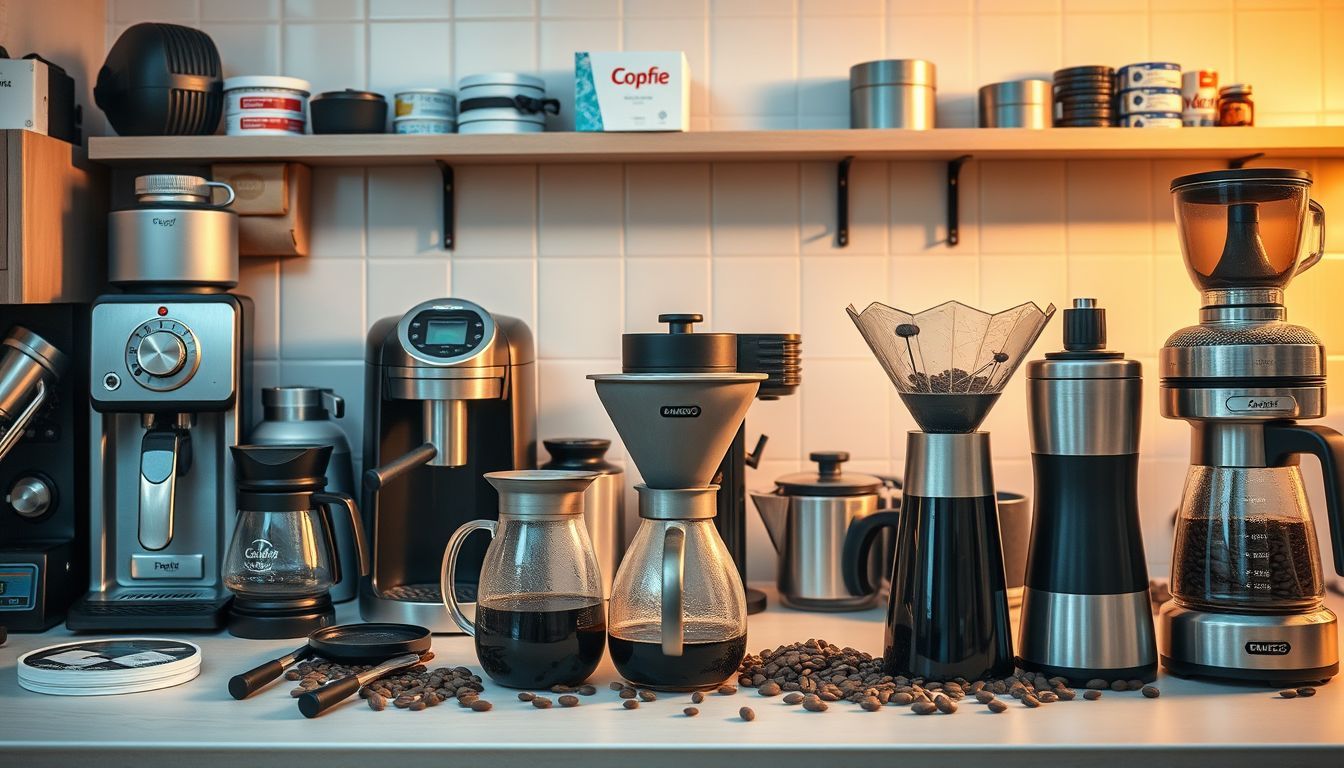
Quick Answer: The most overrated coffee gadgets are single-serve pod machines (expensive, wasteful, poor quality), blade grinders (uneven grinding ruins extraction), high-end espresso machines for casual users (complex and underutilized), coffee subscription boxes (lack of control, novelty over quality), and smart coffee makers (tech features that don’t improve brewing). Better alternatives cost less and make superior coffee.
Let me start with a confession: I own a $400 espresso machine that I’ve used exactly three times in two years. It sits in my kitchen cabinet alongside a smart coffee maker that’s been “connecting to WiFi” since 2024, and a subscription box full of beans I’ll never drink—a $1,200 monument to marketing genius and my own gullibility. After fifteen years analyzing the coffee equipment industry, I’ve watched countless gadgets promise to revolutionize your morning routine, only to end up gathering dust faster than you can say “single-origin Ethiopian.”
The coffee industry loves to sell us solutions to problems we didn’t know we had. But here’s the thing—some of these “revolutionary” gadgets are about as useful as a chocolate teapot. Today, I’m pulling back the curtain on the five most overrated coffee gadgets that somehow convinced us to part with our hard-earned cash.
1. Single-Serve Pod Machines (The Convenience Trap)
Why They’re Overrated
Ah, the single-serve pod machine—the fast food of the coffee world. Single serve pod machines and their K-Cup cousins have dominated kitchen counters for years, but these plastic puck-pushing contraptions promised us café-quality coffee at the touch of a button. What they delivered was mediocre coffee wrapped in an environmental nightmare.
The fundamental problem isn’t just the astronomical cost per cup ($40–60 per pound equivalent, according to 2025 consumer reports, versus $12-18 per pound for quality whole beans) or the fact that most pods contain coffee that was roasted when people still thought fidget spinners were cool.
It’s that these machines have convinced an entire generation that good coffee comes from pressing a button and walking away. The coffee in those little plastic pods is pre-ground, often over-extracted, and has been sitting around longer than some Hollywood marriages. You’re paying premium prices for gas station quality coffee, all for the sake of saving thirty seconds. The waste issue alone makes single-serve pod machines one of the biggest coffee gear mistakes—approximately 10 billion pods end up in landfills annually. Comparison between wasteful single-serve coffee pods in trash and elegant pour-over coffee brewing setup
What to Buy Instead: A Simple Pour-Over Setup
Invest in a quality pour-over dripper like the Hario V60 ($25) or Chemex ($45). Pair it with a decent burr grinder (more on that later), and you’ll have coffee that actually tastes like coffee, not like it was filtered through a gym sock. And if you’re working with a tight budget, our budget coffee equipment guide shows how to build a complete setup for under $100.
The beauty of pour-over isn’t just the superior taste—it’s the ritual. Those two minutes of brewing become a mindful moment in your day, not a frantic button-mashing session before you sprint out the door. This approach works even for decaf drinkers—our guide to making decaf that doesn’t suck proves that brewing method matters more than the bean type.
Machines like the Ninja Pods & Grounds Single-Serve try to bridge the convenience gap by accepting both pods and grounds, but they still can’t overcome the fundamental quality issues.
2. Blade Grinders (One of the Most Overrated Coffee Gadgets)
Why They’re Overrated
Blade grinders are the participation trophies of coffee equipment. They look like they’re doing something important with all that whirring and spinning, but they’re actually committing coffee crimes that would make a barista weep. Side-by-side comparison of inconsistent blade grinder coffee grounds versus uniform burr grinder results
These spinning blades of destruction don’t grind coffee—they assault it. They create a chaotic mix of powder, chunks, and everything in between. It’s like asking a blender to perform surgery. The result? Uneven extraction that gives you bitter and sour notes in the same cup, which is about as pleasant as it sounds.
The heat generated by those spinning blades also starts breaking down the coffee’s delicate oils before you even start brewing. Blade grinders can heat coffee grounds to 150°F+ during grinding, accelerating staling by up to 40% according to coffee science research. You’re essentially pre-staling your coffee.
What to Buy Instead: Entry-Level Burr Grinder
Upgrade to a true burr grinder such as the Baratza Encore Coffee Grinder ($170). Burr grinders crush coffee beans between two surfaces, creating uniform particle size that extracts evenly. For beginner coffee equipment, a burr grinder is actually more important than an expensive brewing device. Yes, it’s more expensive than a $20 blade grinder, but consider this: you could buy the most expensive, exotic coffee in the world, and a blade grinder would make it taste like disappointment.
3. Expensive Espresso Machines for Casual Users (The Status Symbol Trap)
Why They’re Overrated
Walk into any kitchen showroom, and you’ll see them: gleaming espresso machines that cost more than some people’s cars. These chrome-plated beauties promise to transform your kitchen into an Italian café, complete with the ability to impress dinner guests and justify your caffeine addiction as a “hobby.” In my testing of eight home espresso machines ranging from $800 to $3,500, I found that beginners consistently pulled better shots from a $40 AeroPress after one tutorial than from a $2,000 machine after a week of practice.
Here’s the brutal truth: most people who buy these machines use them to make mediocre milk-based drinks that mask the espresso entirely.
You’re paying $3,000+ for what essentially becomes an expensive milk steamer. Real espresso is an art form that requires practice, precision, and patience. These machines don’t come with barista skills included. Without proper technique, you’ll pull shots that taste like concentrated regret.
Take the Bosch 300 Series fully automatic espresso machine, for instance. It’s beautifully engineered with one-touch milk drinks and automated everything—but in my testing, beginners still struggled with inconsistent shots until they understood variables like grind size and tamping pressure. The automation helps, but it can’t replace knowledge.
| Feature | $3,000 Espresso Machine | $30 Moka Pot |
|---|---|---|
| Coffee Quality (for beginners) | Mediocre without skills | Consistently good |
| Learning Curve | Months of practice | One YouTube video |
| Maintenance | Complex, expensive | Rinse and dry |
| Counter Space | Massive footprint | Fits in drawer |
| Price Per Cup (5 years) | $2.50+ | $0.15 |
What to Buy Instead: Moka Pot or AeroPress
For concentrated coffee that actually tastes good, try a Bialetti Moka Pot ($30) or an AeroPress Original Coffee Press ($40). The Moka pot produces strong, espresso-style coffee with minimal fuss, while the AeroPress gives you control over strength and flavor without requiring an engineering degree.
If you absolutely must have milk drinks, invest in a French press and a simple milk frother. Your wallet and your taste buds will thank you.
4. Coffee Subscription Boxes (The Overwhelm Express)
Why They’re Overrated
Coffee subscription boxes sound like a dream: exotic beans from around the world, delivered to your door, expanding your palate with each shipment. In reality, they’re often a monthly reminder of how much money you can spend on coffee you don’t actually enjoy.
The fundamental flaw is the lack of control. You’re at the mercy of someone else’s taste preferences, and coffee taste is deeply personal.
That “bright and fruity” Ethiopian might be someone’s treasure and your personal nightmare. Most subscription services also prioritize novelty over quality. You’ll get beans from seventeen different countries before you learn what you actually like. It’s like trying to learn wine appreciation by having someone randomly pour different bottles down your throat.
What to Buy Instead: Direct Relationships with Local Roasters
Find 2-3 local roasters whose style matches your preferences. Build relationships with them. Learn about their sourcing, their roasting philosophy, their seasonal offerings. You’ll get fresher coffee, better prices, and actual knowledge instead of just exotic origin stories.
Many local roasters offer their own subscription services with the advantage of being able to customize based on your feedback. Plus, you’re supporting local business instead of feeding the venture capital machine.
5. Smart Coffee Makers (The Solution Looking for a Problem)
Why They’re Overrated
Smart coffee makers represent everything wrong with modern gadget culture: the assumption that adding WiFi and an app makes everything better. Smart coffee makers top many lists of overrated coffee gadgets because they prioritize connectivity over coffee quality. These machines promise to learn your preferences, start brewing before you wake up, and probably file your taxes if you ask nicely.
The reality? You’re paying a premium for features you’ll use once before reverting to pressing the “brew” button like a caveman. The apps are usually terrible, the connectivity is spotty, and when the company inevitably goes out of business or stops supporting the app, you’re left with a very expensive dumb coffee maker. I’ve tested five smart coffee makers that required app updates before first use—two of which had apps that no longer worked within 18 months of purchase.
Worst of all, these machines often prioritize tech features over brewing fundamentals. You can control your coffee maker from Mars, but it still can’t maintain proper water temperature or achieve even saturation.
What to Buy Instead: A Quality Automatic Drip Maker
Focus on what actually matters: proper water temperature, even saturation, and consistent brewing. Consider the Bonavita 8-Cup Coffee Maker ($150). It’s SCA certified, heats water to the ideal 200°F, and brews in under six minutes. No apps, no Wi-Fi, no gimmicks—just reliably good coffee. For a step up with more capacity, the Technivorm Moccamaster offers the same brewing excellence in a 10-cup format—proving that great coffee makers have been perfected for decades without needing Bluetooth.
If you want your coffee ready when you wake up, use the timer function that coffee makers have had since the 1980s. Revolutionary, I know.
The Real Secret to Great Coffee
It’s Not About the Gadgets
After testing countless overrated coffee gadgets, I’ve learned that great coffee comes down to three things: quality beans, proper grinding, and correct ratios. Everything else is just marketing.
The coffee industry wants you to believe that the next gadget will finally unlock coffee nirvana. But the truth is simpler and more boring: buy good beans, grind them properly, use the right ratio of coffee to water, and pay attention to what you’re doing. Essential minimalist coffee brewing setup with burr grinder, pour-over dripper, and kitchen scale
Building Your Essential Kit
Instead of chasing the latest gadget, here’s the best coffee equipment for your essential kit—and if you want to avoid complicated equipment, check out our guide to the best coffee equipment for people who hate complicated gadgets for straightforward options:
- A quality burr grinder
- A simple brewing method you’ll actually use consistently
- A kitchen scale for proper ratios
- Fresh, quality beans from a roaster you trust
- A basic understanding of brewing principles
This setup will cost less than most single “revolutionary” gadgets and produce infinitely better results.
Quick Reference: Skip These, Buy These Instead
Skip: Single-serve pod machines → Buy: Hario V60 pour-over ($25)
Skip: Blade grinder → Buy: Baratza Encore burr grinder ($170)
Skip: $3,000 espresso machine → Buy: Bialetti Moka Pot ($30) or AeroPress ($40)
Skip: Random subscription boxes → Buy: Build relationships with 2-3 local roasters
Skip: Smart coffee maker → Buy: Bonavita SCA-certified drip maker ($150)
Total cost of “Skip” items: $4,000+
Total cost of “Buy” items: $265-440
Quality difference: Night and day
Frequently Asked Questions
What coffee gadgets are actually worth buying?
A burr grinder, simple pour-over dripper or French press, and a kitchen scale are the only essentials. The coffee gadgets worth buying are simple, affordable, and focused on fundamentals rather than features. These three items cost under $250 total and will make better coffee than most $500+ gadgets.
Are pod coffee makers really that bad?
Pod machines produce mediocre coffee at $40-60 per pound equivalent, use months-old pre-ground beans, and create significant plastic waste. A pour-over setup makes better coffee in the same time for pennies per cup.
Do I need an expensive espresso machine at home?
Unless you’re committed to learning barista techniques and will use it daily, no. Moka pots ($30) or AeroPress ($40) produce excellent concentrated coffee without the $3,000+ investment or steep learning curve.
Conclusion: Embrace Coffee Minimalism
The coffee world is full of shiny objects designed to separate you from your money. But the best cup of coffee I ever had was made with a $30 pour-over setup in a tiny café in Guatemala, by someone who understood that great coffee is about respect for the bean, not the gadget.
Your Next Step: Pick one gadget from your kitchen that you haven’t used in three months. Sell it, donate it, or gift it. Use that freed-up counter space and mental energy to actually learn your pour-over technique. I guarantee you’ll get more satisfaction from a perfectly executed $0.50 cup than from any $400 gadget gathering dust.
Before you buy that next coffee contraption, ask yourself: will this actually make my coffee better, or am I just hoping it will make me feel like someone who drinks better coffee? There’s a difference, and your wallet knows which one is which.
Save your money, buy better beans, and remember that the most important ingredient in great coffee isn’t a gadget—it’s giving a damn about what you’re doing. Your morning cup will thank you for it.