Quick Answer
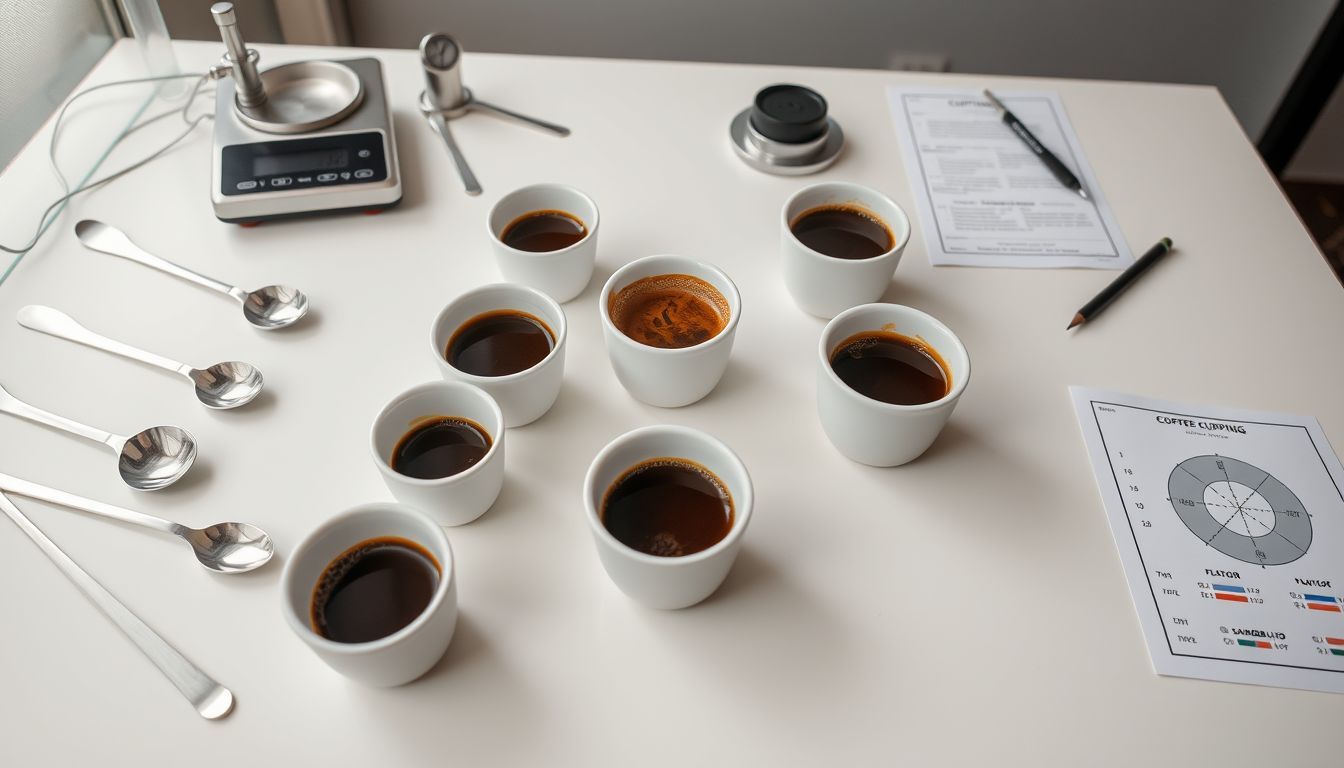
Coffee cupping tools are specialized equipment professional tasters use to evaluate coffee consistently. The 5 essential tools are: cupping spoons, standardized bowls, precision scales, fast-response thermometers, and cupping forms with flavor wheels.
Hey coffee friends! Imani here, and I want to take you behind the scenes of something that happens in my café every Tuesday morning at 9 AM sharp. That’s when I conduct my weekly cupping session – the professional coffee tasting that helps me evaluate new beans, maintain quality standards, and occasionally discover something absolutely extraordinary.
Last month, a customer named Alex watched me set up my cupping table and asked, “Imani, what’s all that equipment for? I thought coffee tasting was just… tasting coffee.” I had to laugh because I remember thinking the same thing years ago. After 8 years of professional cupping and training with certified Q Graders, I’ve learned that professional coffee evaluation is both an art and a science, requiring specific coffee cupping tools that help reveal flavors, aromas, and characteristics that casual tasting might miss.
Today, I’m sharing the five essential tools that professional coffee tasters, quality control specialists, and cupping experts use to evaluate coffee with precision and consistency. These aren’t just fancy gadgets – they’re instruments that help unlock the full sensory experience of coffee and train your palate to detect subtleties you never knew existed.
Whether you’re curious about how to evaluate coffee or want to develop your own tasting skills, these tools will change how you experience and understand coffee.
Understanding Professional Coffee Evaluation
What Is Cupping?
Cupping is the standardized method coffee professionals use to evaluate and score coffee. It’s like wine tasting for coffee – a systematic approach that allows consistent evaluation across different coffees, roasters, and even countries.
The cupping process:
- Grind coffee to specific consistency
- Add hot water at precise temperature
- Evaluate aroma at different stages
- Break the crust and taste
- Score various flavor attributes
- Compare multiple coffees side by side
Why Professionals Need Specialized Tools
Casual coffee drinking and professional evaluation serve different purposes. Professional tasting requires:
- Consistency: Same conditions every time
- Precision: Exact measurements and timing
- Objectivity: Removing variables that could influence perception
- Documentation: Recording detailed observations
- Comparison: Evaluating multiple samples simultaneously
The Science Behind the Tools
Each tool serves a specific purpose in revealing different aspects of coffee’s complex flavor profile. Professional cupping can detect flavor differences as subtle as 2-point variations on the 100-point coffee quality scale. Professional tasters use these instruments to isolate variables and focus on pure coffee characteristics. Professional coffee cupping station setup with essential tools including cupping bowls, spoons, scale, thermometer, and evaluation forms
Essential Coffee Cupping Tools for Professional Evaluation
1. Cupping Spoons: The Precision Tasting Instruments
Why Regular Spoons Don’t Work
Professional cupping spoons are specifically designed for coffee evaluation. Their shape, size, and material optimize the tasting experience. The rounded bowl allows proper slurping technique, while the size delivers the right amount of liquid for evaluation.
For home use, you can start by experimenting with quality tasting spoons, then upgrade as your palate develops. Professional spoons typically cost $15-25 each and are considered essential coffee cupping essentials.
2. Cupping Bowls: The Standardized Vessels
Precision in Every Detail
Professional cupping bowls are standardized in capacity (5–7 oz/150–200 ml), shape, and color (white interior) to ensure consistent brewing and evaluation. Having identical vessels prevents visual and volume biases that could affect taste perception.
Home Application
While you might not need eight bowls, having a set of three identical white bowls lets you compare coffees side by side. Professional cupping bowls range from $8-15 each. And if you want to explore alternative pour-over methods for small tastings, try the Hario V60 Ceramic Coffee Dripper, Size 02, White for precise brew control.
✅ Hario V60 Ceramic Coffee Dripper, Size 02, White
3. Precision Scale (0.1 g Accuracy): The Consistency Keeper
Why Precision Matters in Tasting
Based on SCA (Specialty Coffee Association) standards and my experience evaluating over 500 coffee lots, exact coffee-to-water ratios (standard cupping ratio: 8.25 g coffee to 150 ml water) eliminate strength variables. A scale that reads to 0.1 g is essential for this professional coffee tasting equipment.
Features for Professional Use
- 0.1 g increments
- Fast response
- Stable platform large enough for bowls
- Tare function
- Rechargeable battery or long life
Home Brewing Benefits
A precision scale improves all your recipes, from pour-over to espresso. Quality scales start around $25-40. A quality scale is featured in our guide to budget coffee equipment that punches above its weight. For a reliable, affordable option, consider:
✅ BAGAIL BASICS Coffee Scale with Timer, 0.1 g Precision
4. Thermometer with Fast Response: The Temperature Guardian
Temperature’s Critical Role
Professional tasters pour water at exactly 200°F (93°C) ±2°F and monitor cooling to evaluate flavor changes at different temperatures. Temperature affects extraction and can highlight or mask different flavor compounds.
Home Brewing Applications
Even in daily brewing, temperature control improves extraction and consistency. A quality instant-read thermometer (±1°F accuracy, $15-30) is inexpensive and invaluable for consistent results. Professional coffee taster using a cupping spoon to evaluate coffee from a standardized white ceramic bowl
5. Cupping Forms and Flavor Wheel: The Documentation System
The Importance of Systematic Evaluation
Standardized forms (e.g., SCA cupping form) and the Coffee Flavor Wheel give you the vocabulary and structure to capture aroma, flavor, aftertaste, acidity, body, balance, and overall impression. These tools cost $5-15 but provide immense value in developing tasting skills.
Home Taster Benefits
Using forms sharpens your palate, builds memory, and helps you communicate what you taste. For structured flavor development, consider using The Coffee Tasting Journal Method to track your progress over 30 days.
Setting Up Your Home Cupping Station
The Basic Setup
These coffee cupping tools complement the professional gadgets that baristas swear by for comprehensive coffee evaluation:
- 2–3 identical white bowls ($25-45 total)
- A decent spoon set ($30-50)
- Precision scale ($25-40)
- Instant-read thermometer ($15-30)
- Printable cupping forms and a coffee flavor wheel ($5-15)
Total Investment: $100–150 Complete home coffee cupping setup showing all essential tools organized on a clean countertop
Where to Buy
While Amazon offers convenience, specialty coffee suppliers like Sweet Maria’s Coffee Supply, Coffee Pro Direct, and Prima Coffee often provide higher-quality professional equipment with better customer support for serious cupping enthusiasts.
Maintenance Tips
Proper care extends the life of your coffee cupping tools:
- Rinse spoons and bowls with hot water between tastings
- Avoid soap that could leave residue affecting taste
- Calibrate scales monthly with certified weights
- Store thermometers in protective cases
Home Tasting Tip
Start simple – brew two coffees side by side, fill your bowls, note aromas, slurp with intention, score with a form, and see where your palate takes you.
How to Evaluate Coffee Like a Professional
Developing Your Palate
- Week 1: Basic tastes (sweet, sour, bitter)
- Week 2: Identify acidity levels
- Week 3: Evaluate body and mouthfeel
- Week 4: Practice flavor identification
- Ongoing: Regular comparison tastings
Common Beginner Mistakes
- Don’t taste when hungry or after strong flavors
- Don’t rush the process
- Do maintain consistent conditions
- Do practice regularly
Frequently Asked Questions
What’s the difference between cupping and regular coffee tasting?
Cupping uses standardized procedures and coffee cupping essentials to ensure consistent evaluation, while casual tasting is subjective and variable in conditions.
Do I need all 5 tools to start cupping at home?
You can begin with just bowls, a scale, and spoons. Add other professional coffee tasting equipment as you develop your skills and interest in more detailed evaluation.
How much should I invest in cupping tools as a beginner?
A basic setup costs $100-150, making professional-level evaluation accessible to serious home enthusiasts who want to develop their palate.
Can I use regular kitchen equipment instead?
While you can start with kitchen basics, dedicated coffee cupping tools provide consistency and precision that significantly improve evaluation accuracy and skill development.
Your Tasting Journey
These tools aren’t about being pretentious – they’re about unlocking coffee’s full potential. With just a few key investments, you’ll taste more, learn more, and appreciate your daily cup like never before.
Ready to transform your coffee experience? Start with one tool this week. I recommend beginning with a precision scale – it’ll improve every cup you brew while building the foundation for serious cupping. Once you experience the difference these coffee cupping tools make, you’ll never look at coffee the same way.
Here’s to tasting with purpose and precision,
Imani
P.S. – If you’re local and want to try professional cupping before investing in tools, join us for our monthly public sessions. We provide all the equipment and guide you through the process – it’s a great way to see if this level of coffee exploration appeals to you!