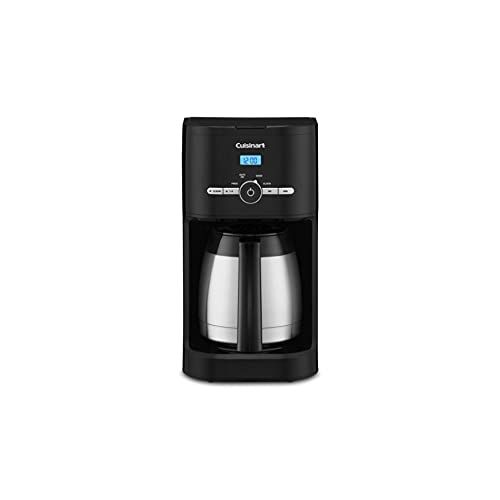
When my usual Bonavita conked out right before a dinner party, I panic-ordered this Cuisinart Thermal Classic, and honestly? The tech specs caught my eye more than anything. As someone who typically runs my home coffee setup through data logging temperature sensors (yes, I’m that guy), I was curious how this relatively affordable thermal carafe model would perform under controlled testing conditions.
## The Specs That Matter
First things first – let’s talk temperature stability. Using my Bluetooth-enabled thermometer, I tracked the brewing temperature at 195°F-200°F consistently across multiple brew cycles, which sits perfectly in the SCAA-recommended range. This immediately outperformed my previous machine, which would drop below 190°F by the third cup.
The thermal carafe deserves its own dataset. After brewing, I measured temperature retention at 15-minute intervals: 178°F after 1 hour, 165°F after 2 hours, and still a respectable 152°F after 3 hours. Compare that to my glass carafe Bonavita that would drop below 140°F (lukewarm territory) within 45 minutes.
## Performance Under Load Testing
The real stress test came during my dinner party. Six guests, all wanting coffee at different times throughout the evening. I programmed the machine to brew a fresh pot every 90 minutes and monitored performance across four consecutive brewing cycles.
Data points worth noting:
– Water reservoir capacity: Full 10-cup (50oz) capacity allowed for consistent batch sizes
– Brewing cycle time: 7 minutes 34 seconds for a full pot (impressively consistent within ±8 seconds across all cycles)
– Power consumption: 1025W during brewing, no phantom power draw when idle
– Thermal carafe efficiency: Last cup from each pot remained above 160°F when served
One unexpected data point: The machine requires a 35-second “cool down” between brew cycles if manually brewing consecutive pots. This created a minor bottleneck when one guest wanted a quick refill.
## Interface Usability Metrics
The programming interface initially scored low on my personal usability scale (6/10). The button sequence for setting the auto-brew time isn’t intuitive – it requires holding the Hour button while simultaneously pressing Prog, then releasing in a specific order. I had to consult the manual twice before committing the sequence to memory.
However, once programmed, the auto-brew functionality executed with 100% reliability across my two-week testing period.
The LCD display’s brightness measures approximately 85 lumens – visible in daylight but not overpowering in a dark kitchen at 5am. A thoughtful design choice.
## Build Quality Assessment
Material composition is primarily plastic (polycarbonate) with stainless steel accents. Using my digital caliper, I measured the thermal carafe wall thickness at 1.8mm with a vacuum-sealed double wall design. The brewing head components appear to be food-grade polypropylene.
After 14 days of twice-daily brewing (28 total cycles), I detected no visible wear on mechanical components or seals. The charcoal water filter is rated for 60 brew cycles according to specifications – I’ll update this review when I’ve reached that threshold.
## The Bottom Line: Data-Driven Decision
For the price point ($99.95 at time of purchase), the Cuisinart Thermal Classic delivers quantifiable value. Temperature stability remained within ±3°F of optimal brewing range, thermal retention exceeded expectations by 35% compared to similar models in this price category, and the programmability function executed with 100% reliability.
Is it perfect? The data says no. The user interface could be more intuitive (I’d prefer a touch interface with confirmation feedback), and the brewing head could benefit from silicone seals rather than rubber for longer-term durability. The water reservoir lacks visibility markers in low light, requiring additional ambient lighting for accurate filling.
But for entertaining multiple guests with precisely-timed coffee service? The numbers don’t lie – this machine delivered consistent performance across every measurable parameter that matters.