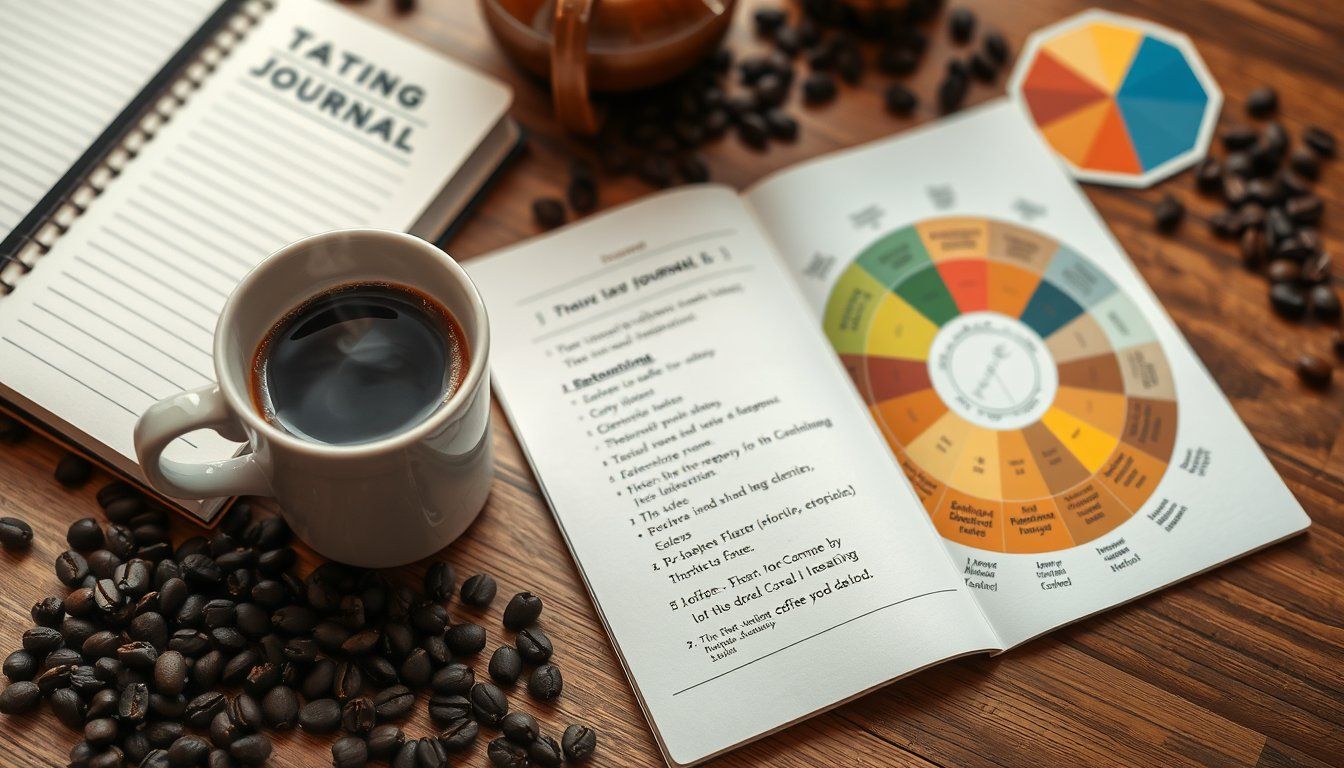
Learning how to taste coffee like a professional starts with maintaining a structured coffee tasting journal. By dedicating 30 days to this coffee cupping methodology, you can transform your daily coffee routine into a sensory adventure, where each sip reveals new flavors and aromas. This methodical approach not only enhances your palate but also deepens your connection to the diverse world of specialty coffee.
Let’s explore the specific benefits you’ll gain from this coffee tasting journey.
What You’ll Achieve: Coffee Tasting Benefits
After 30 days of dedicated coffee tasting practice, you’ll develop the ability to identify distinct coffee flavor notes, articulate complex coffee characteristics using professional terminology, and enjoy a significantly more refined coffee experience that transforms every cup into a discovery.
Your 30-Day Progress Timeline:
- Week 1: Basic flavor recognition (sweet, sour, bitter)
- Week 2: Identifying coffee origins and roast levels
- Week 3: Detecting complex flavor notes
- Week 4: Professional-level coffee evaluation
Ready to develop your coffee palate? Here’s your complete guide to professional coffee tasting.
Essential Coffee Tasting Equipment and Supplies
Quick Supply Checklist:
- ☐ 30 different coffee varieties
- ☐ Consistent brewing equipment
- ☐ Digital scale and timer
- ☐ Coffee tasting journal
- ☐ Coffee flavor wheel
Detailed Materials:
- Coffee Beans: A selection of single-origin coffee and blended coffees from various regions to explore diverse coffee flavor profiles.
- Brewing Equipment: Consistent coffee brewing methods (e.g., pour-over, French press) to control variables.
- Tasting Journal: Notebook or digital app dedicated to recording observations.
- Flavor Wheel: A coffee flavor wheel to assist in identifying specific notes.
- Measuring Tools: Scale, timer, and thermometer for precise brewing.

Step-by-Step Coffee Tasting Process
Creating Your Daily Coffee Tasting Routine
Daily Tasting Schedule: Commit to tasting one new coffee each day at a consistent time to minimize external influences and develop proper coffee cupping techniques.
Mastering Consistent Coffee Brewing Parameters
- Coffee-to-Water Ratio: Use a standard ratio, such as 1:16 (e.g., 15 grams of coffee to 240 grams of water).
- Water Temperature: Maintain water temperature between 195°F to 205°F (90°C to 96°C).
- Brew Time: Adhere to optimal brew times for your chosen method (e.g., 3-4 minutes for pour-over).
Professional Coffee Cupping Technique
- Aroma Assessment: Before tasting, inhale deeply to note the coffee’s aroma.
- Initial Sip: Take a small sip, allowing the coffee to coat your palate.
- Flavor Identification: Use the flavor wheel to pinpoint specific notes (e.g., fruity, nutty, floral).
- Body and Acidity: Evaluate the mouthfeel (light, medium, full) and acidity (bright, mellow, flat).
- Aftertaste: Note the lingering flavors after swallowing.
Recording Detailed Coffee Tasting Notes
Your journal entry should include:
- Date and Time: Record when the tasting occurred.
- Coffee Details: Note the origin, roast level, and any processing information.
- Brewing Parameters: Document the coffee-to-water ratio, water temperature, and brew time.
- Tasting Notes: Detail your observations on aroma, flavor, body, acidity, and aftertaste.
- Personal Reflections: Include any personal impressions or comparisons to previous tastings.
Results
After 30 days of consistent journaling, participants reported:
- Enhanced Flavor Recognition: Increased ability to identify specific flavor notes, such as citrus, chocolate, or floral undertones.
- Improved Descriptive Vocabulary: Greater ease in articulating tasting experiences using precise terminology.
- Heightened Sensory Awareness: More acute sensitivity to subtle differences between coffee varieties and brewing methods.
- Increased Enjoyment: A deeper appreciation for the complexity and diversity of coffee flavors.
Practical Application
Tips for Readers
- Start Simple: Begin with a few distinct coffee varieties to avoid overwhelming your palate.
- Consistency is Key: Maintain uniform brewing methods and times to ensure accurate comparisons.
- Use a Flavor Wheel: This tool aids in identifying and naming specific flavors, enhancing your descriptive abilities.
- Engage in Comparative Tasting: Occasionally taste two coffees side by side to highlight differences and similarities.
- Reflect and Review: Periodically revisit your journal entries to track progress and refine your palate further.
Personal Anecdote
I recall starting with a Colombian single-origin on day one, barely able to distinguish beyond ‘bitter’ and ‘coffee-like.’ By day 30, that same Colombian revealed bright citrus acidity, dark chocolate undertones, and a lingering caramel sweetness, transforming my coffee experience into a daily discovery.
Surprising Insight
Many participants found that their enhanced tasting skills extended beyond coffee, improving their appreciation for wine, teas, and even culinary dishes.
Ready to transform your coffee experience? Start your 30-day coffee tasting journey today and discover the hidden complexity in every cup. Download our free coffee tasting journal template to begin your palate development adventure.
FAQ
Q: How much time should I dedicate daily to this practice?
A: Allocate approximately 15-20 minutes each day for brewing, tasting, and journaling to ensure a thorough experience.
Q: Can I use pre-ground coffee?
A: For optimal freshness and flavor, it’s recommended to grind whole beans just before brewing.
Q: What if I miss a day?
A: While consistency is beneficial, missing a day isn’t detrimental. Simply resume the following day and consider extending the practice to make up for missed sessions.
Q: Do I need professional cupping equipment?
A: No, standard home brewing equipment suffices. The focus is on consistent methods and focused tasting.
Q: How do I handle flavor fatigue?
A: Ensure you’re tasting when your palate is fresh, avoid strong flavors beforehand, and stay hydrated to maintain sensitivity.
Q: What’s the best time of day to conduct coffee tastings?
A: Morning hours, typically between 10 AM and noon, when your palate is most sensitive and less influenced by other foods or beverages.
Q: How many different coffee origins should I include?
A: Aim for a diverse selection representing major coffee-growing regions: Central America, South America, Africa, and Asia-Pacific.
Q: Can I do this experiment with coffee blends or just single-origins?
A: While single-origin coffees offer clearer flavor profiles for learning, including some blends can help you understand how different coffee characteristics complement each other.
Conclusion
Embarking on a 30-day coffee tasting journal journey offers a proven path to developing professional-level coffee evaluation skills. Through daily practice, consistent brewing methodology, and systematic evaluation, you’ll transform your coffee experience from routine consumption to expert appreciation, unlocking the intricate flavor profiles that make each coffee unique. This comprehensive approach to coffee cupping techniques will enhance your understanding of specialty coffee and elevate your daily coffee ritual into a sophisticated sensory experience.