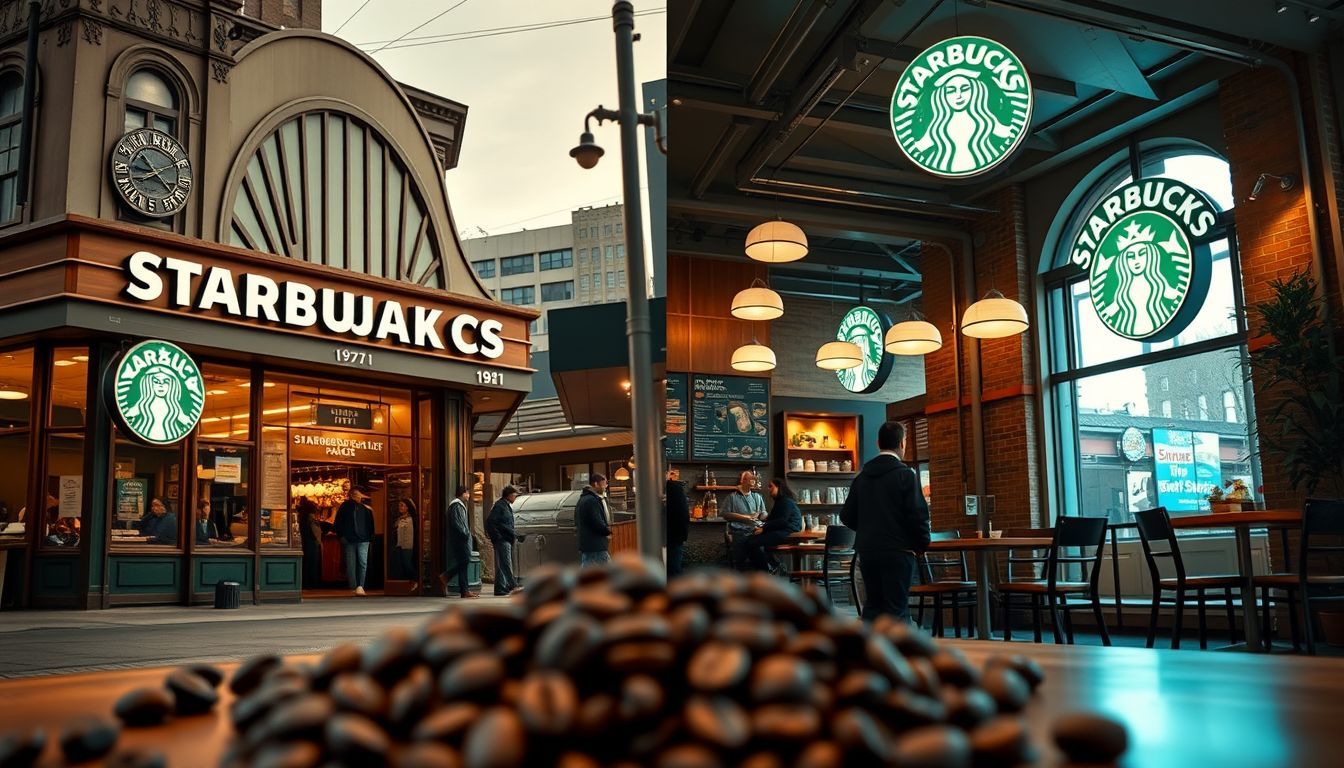
Quick Answer: Starbucks became popular through a combination of perfect timing (1980s-90s specialty food boom), transforming coffee from utilitarian beverage to lifestyle experience, creating the “third place” concept between home and work, aggressive strategic expansion in high-traffic locations, and making specialty coffee accessible to mainstream America. Their consistency, innovative marketing (seasonal drinks, name-on-cup personalization), and complete atmosphere design turned coffee buying into a cultural phenomenon.
Hey coffee lovers! Imani here, and today I want to dive into something that’s been on my mind lately. As someone who runs an independent café, I get asked this question a lot: “How did Starbucks become such a massive success—transforming from a single Seattle coffee bean store in 1971 to 35,000+ locations worldwide? And more importantly for coffee lovers, what can we learn from their journey?”
It’s a fair question, especially when you consider that just fifty-five years ago, most Americans were drinking instant coffee or basic drip coffee at home.
Now, I’ll be honest with you – as an independent café owner, I have mixed feelings about the green mermaid. But I’d be foolish not to acknowledge what they’ve accomplished and what we can all learn from their journey. So grab your favorite cup (hopefully filled with some amazing local coffee!), and let’s explore how did Starbucks become popular from a small Seattle coffee bean retailer to a global phenomenon.
The Humble Seattle Beginnings: Starbucks History That Explains How They Became Popular
From Coffee Beans to Coffee Dreams
Starbucks didn’t start as the coffee shop empire we know today. When Jerry Baldwin, Zev Siegl, and Gordon Bowker opened the first store in Seattle’s Pike Place Market in 1971, they were simply selling high-quality coffee beans and equipment. No fancy drinks, no comfortable seating areas – just really good coffee beans for people to take home.
What strikes me about this origin story is how it mirrors what many of us independent café owners value: quality ingredients and the right tools. They stocked their shop with precision brewing gear, and likewise I always recommend investing in a great dripper like the Hario V60 Ceramic Coffee Dripper to craft clean, nuanced brews at home.
The Howard Schultz Revolution
The real transformation began when Howard Schultz joined the company in 1982. During a trip to Italy, Schultz experienced something that would change everything: the Italian coffee bar culture. He saw how espresso bars weren’t just places to grab coffee – they were community gathering spaces, social hubs where people connected over expertly crafted drinks.
I get that completely. When I designed my own café, I didn’t just think about coffee; I thought about the complete ritual and experience that would keep customers coming back. Cozy Italian-inspired espresso bar interior showing the community gathering space concept that inspired Starbucks’ third place philosophy
The Perfect Storm of Timing and Innovation
Riding the Specialty Coffee Movement
Starbucks hit the market at exactly the right time. The 1980s and 1990s saw Americans becoming more sophisticated in their tastes – we were discovering wine culture, gourmet food, and yes, specialty coffee. According to the National Coffee Association, specialty coffee consumption increased from 9% of American coffee drinkers in 1999 to 48% by 2022—a trend Starbucks both catalyzed and capitalized on.
Understanding Starbucks history helps explain why independent coffee shop vs Starbucks debates continue today—they fundamentally changed what coffee shop success looks like in America.
They introduced Americans to drinks that sounded exotic and European: cappuccinos, lattes, macchiatos. Suddenly, ordering coffee became an experience rather than just a caffeine delivery system. They created a vocabulary around coffee that made customers feel sophisticated and worldly. Variety of specialty coffee drinks including cappuccino, latte, and macchiato showcasing the European coffee culture Starbucks introduced to America
The “Third Place” Concept
One of Schultz’s most brilliant insights was positioning Starbucks as the “third place” – not home, not work, but somewhere in between. They invested heavily in creating comfortable environments with cozy seating, warm lighting, and that distinctive coffeehouse atmosphere.
As someone who’s spent countless hours perfecting ambiance in my own café, I can tell you this isn’t easy. In my eight years running an independent café, I’ve tested dozens of seating arrangements and lighting configurations to capture that same “third place” magic. I’ve learned that comfortable seating matters, but so does acoustics—customers need to feel they can have private conversations without complete silence. Coffee shop interior demonstrating the third place concept with comfortable seating, natural lighting, and customers socializing and working