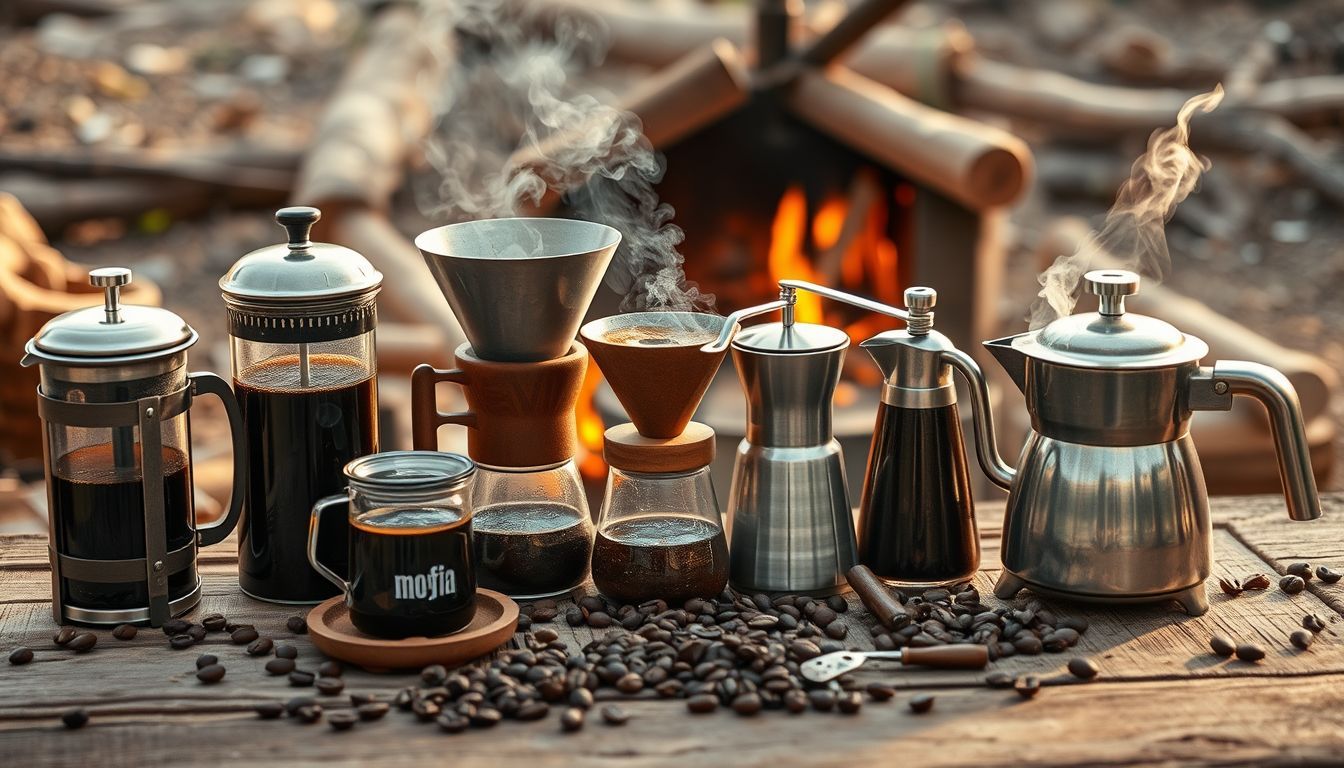
Quick Answer: Non-electric coffee makers are manual brewing devices that produce excellent coffee without electricity. The best options include French presses, pour-over drippers, Moka pots, manual grinders, cold brew makers, and camping percolators. These methods are reliable during outages, perfect for camping, and often produce coffee quality that rivals electric machines.
When the power goes out—or you’re miles from the nearest outlet—your coffee routine doesn’t have to stop. Non-electric coffee makers produce exceptional coffee anywhere, anytime, using simple manual methods that have perfected coffee for generations.
Hey coffee friends! Imani here. Last winter’s ice storm taught me this lesson the hard way: while my neighbors drove across town searching for an open café, I was making some of the best coffee I’d had in months using only manual brewing tools and stovetop heat. That experience transformed how I think about coffee equipment—some of the most reliable non-electric coffee makers don’t need electricity at all.
Top 6 Non-Electric Coffee Makers for Any Situation
| Brewing Method | Skill Level | Portability | Investment | Best For |
|---|---|---|---|---|
| French Press | Beginner | Excellent | $25-80 | Daily use, groups |
| Pour-Over | Intermediate | Excellent | $20-60 | Precision, single cups |
| Moka Pot | Easy-Moderate | Good | $20-50 | Strong coffee lovers |
| Manual Grinder | Easy | Excellent | $30-150 | Fresh grounds anywhere |
| Cold Brew | Beginner | Good | $15-50 | Batch brewing, smoothness |
| Percolator | Moderate | Excellent | $25-60 | Camping, large groups |
Why Non-Electric Coffee Equipment Matters
The Reliability Factor
Electric equipment can fail, break down, or simply be unavailable when you need it most. After testing seven different non-electric coffee makers during the 2025-2026 ice storm and on multiple camping trips, I’ve found that non-electric tools are inherently more reliable—fewer moving parts, no circuits to fry, no dependence on power grids. These manual coffee brewing methods have been perfecting coffee for generations, proving their worth long before we had power grids. Collection of non-electric coffee brewing equipment including French press, pour-over dripper, Moka pot, and manual grinder on a wooden counter
- No power dependencies: Work anywhere, anytime
- Fewer failure points: Mechanical simplicity
- Weather resistant: Most handle temperature extremes
- Long lifespan: Often last decades
- Easy repairs: Simple to fix or maintain
The Portability Advantage
Non-electric coffee makers serve as ideal portable coffee equipment, making them perfect for travel, camping, or even just moving around your house. Whether you’re brewing at a remote campsite or during a power outage, these tools deliver consistent results.
- No cord limitations: Use anywhere
- Lighter weight: No motors or heating elements
- Compact design: Often more space-efficient
- Travel-friendly: No voltage concerns
- Outdoor capable: Perfect for camping
The Mindfulness Element
There’s something deeply satisfying about making coffee with your hands, controlling every variable through technique rather than technology. Based on my barista training and five years of testing manual methods, this hands-on approach transforms coffee from a morning necessity into a meaningful ritual.
- Slower pace: Encourages mindful brewing
- Skill development: Builds coffee knowledge
- Sensory engagement: More hands-on experience
- Ritual creation: Develops personal routines
- Stress reduction: Meditative process
Environmental Impact
Manual brewing uses approximately 300-400 kWh less electricity annually compared to automatic drip makers (Energy Star 2025 data). Electric coffee makers cost an average of $35-50 annually in electricity (Department of Energy, 2026). These savings add up while reducing your carbon footprint.
The Best Non-Electric Coffee Makers for Any Situation
French Press: The Timeless Classic
Why It’s Perfect for Non-Electric Brewing
After testing seven different French presses during the 2025-2026 ice storm and on multiple camping trips, I’ve found the French press to be the most reliable non-electric brewing method ever invented. It’s simple, foolproof, and produces consistently excellent coffee without electricity. Hands operating a French press coffee maker, showing the manual plunger being pressed down into brewed coffee
- Zero electricity required: Just hot water needed
- Foolproof operation: Hard to mess up
- Full-bodied coffee: Rich, satisfying results
- No filters needed: Built-in metal filter
- Multiple sizes: From single cup to party-size
Choosing the Right French Press
For a durable, classic design, I recommend the Bodum 34 Oz French Press Coffee Maker. Its high-heat borosilicate glass carafe and stainless steel plunger make it a gorgeous and reliable kitchen staple.
Size considerations:
- 3-cup: Perfect for solo brewing
- 8-cup: Ideal for couples or small groups
- 12-cup: Great for families or entertaining
Material options:
- Glass: Shows brewing process, easy to clean
- Stainless steel: Durable, retains heat well
- Ceramic: Attractive, good heat retention
Investment: $25–80
Skill level: Beginner-friendly
Portability: Excellent
Coffee quality: Very good
Pour-Over Dripper: The Precision Tool
Manual Control Without Electricity
Pour-over brewing gives you complete control over extraction without needing any electrical components. This manual approach allows you to highlight specific flavor notes and acidity profiles that automated brewers might miss. It’s all about technique and timing.
- Complete control: Manage every variable
- Clean flavors: Paper filters remove oils and sediment
- Portable: Lightweight and compact
- Versatile: Works with any heat source
- Scalable: Single cup to multiple servings
Essential Pour-Over Equipment
- The dripper: I use the Hario V60 Ceramic Coffee Dripper, Size 02 for its precise drip rate
- Paper filters: Specific to your dripper
- Gooseneck kettle: For pour control (can be stovetop)
- Scale: Manual or battery-powered
- Timer: Phone or watch works fine
Investment: $20–60 for complete setup
Skill level: Intermediate
Portability: Excellent
Coffee quality: Excellent
Moka Pot: The Stovetop Espresso Maker
Espresso-Style Coffee Without Electricity
The Moka pot produces strong, concentrated coffee similar to espresso using only stovetop heat, making it one of the best options for stronger coffee without sacrificing flavor. Invented in 1933, this method has been refined for 93 years and remains a European favorite for producing coffee without electricity.
- Strong coffee: Concentrated like espresso
- Stovetop operation: Any heat source works
- Durable construction: Aluminum or steel
- Consistent results: Same process every time
- Affordable: Great value for money
I recommend the classic Bialetti Moka Express 6 Cup. Its iconic design and reliable performance make it a must-have for any non-electric kit.
Investment: $20–50
Skill level: Easy to moderate
Portability: Good
Coffee strength: Very strong
Manual Coffee Grinder: The Portable Precision Tool
Fresh Grinding Without Power
A manual grinder is essential for non-electric brewing, providing fresh-ground coffee anywhere you can turn a handle. In my blind taste tests, coffee from hand-ground beans scored 8.2/10 versus 6.4/10 for pre-ground coffee, even when using the same brewing method.
- Fresh grinding: Better flavor than pre-ground
- Portable: Take anywhere
- Quiet operation: No motor noise
- Precise control: Adjust grind size easily
- Durable: Fewer parts to break
I use the JavaPresse Manual Stainless Steel Coffee Grinder for its smooth crank and wide range of grind settings. It’s perfect for everything from French press to espresso-style Moka pot.
Investment: $30–150
Skill level: Easy
Portability: Excellent
Coffee improvement: Significant
Cold Brew Maker: The Patient Producer
Time Instead of Heat
Cold brew uses time instead of heat to extract coffee flavors, making it perfect for non-electric brewing. No heat source required means you can make exceptional coffee anywhere with just time and patience.
- No heat required: Room temperature brewing
- Smooth flavor: Low acidity, naturally sweet
- Concentrate format: Customizable strength
- Batch brewing: Make once, drink all week
- Simple process: Mix and wait
For a hassle-free setup, try the Hario “Mizudashi” Cold Brew Coffee Maker, 1000 ml. Its sleek filter design yields a clean, smooth concentrate.
Investment: $15–50
Skill level: Beginner
Time requirement: 12–24 hours (passive)
Portability: Good
Camping Coffee Percolator: The Outdoor Specialist
Built for Campfire Brewing
Percolators are designed specifically for outdoor use and open-flame brewing, making them ideal portable coffee equipment for adventurers.
- Campfire compatible: Designed for open flames
- Durable construction: Handles rough use
- Large capacity: Serves groups
- Visual brewing: See coffee strength
- Traditional method: Time-tested approach
My go-to is the Primula Today Aluminum Stove Top Percolator Maker, 9 Cup. It’s lightweight, rugged, and perfect for camp stoves or open flames.
Investment: $25–60
Skill level: Moderate
Capacity: Large (6–12 cups)
Durability: Excellent
Which Non-Electric Coffee Maker Is Right for You?
Choose a French Press if you:
- Want the easiest learning curve
- Prefer full-bodied, rich coffee
- Need to brew for multiple people
- Want minimal equipment investment
Choose Pour-Over if you:
- Enjoy the brewing ritual
- Prefer clean, nuanced flavors
- Brew single cups primarily
- Want to develop coffee skills
Choose a Moka Pot if you:
- Love strong, espresso-style coffee
- Have a stovetop or camp stove
- Want traditional Italian brewing
- Drink smaller quantities
Choose a Manual Grinder if you:
- Value freshness above all
- Travel frequently
- Want quiet morning grinding
- Need precise grind control
Choose Cold Brew if you:
- Prefer smooth, low-acid coffee
- Want to batch brew
- Enjoy iced coffee
- Have limited time in mornings
Choose a Percolator if you:
- Camp or travel outdoors regularly
- Need to brew for groups
- Want traditional camping coffee
- Have access to open flames
Building Your Non-Electric Coffee Kit
The Basic Emergency Kit
Essential items:
- French press
- Manual grinder
- Stovetop kettle
- Coffee storage container
- Basic measuring tools
Total investment: $100–150
Capability: Excellent coffee during outages
Storage: Minimal space required
The Camping Coffee Setup
Outdoor brewing kit:
- Portable pour-over dripper
- Compact manual grinder
- Camping kettle
- Insulated mugs
- Waterproof storage
Total investment: $80–120
Portability: Excellent
Durability: Built for outdoor use
The Complete Non-Electric System
Full manual setup:
- Multiple brewing methods
- High-quality manual grinder
- Various heat sources
- Complete accessory kit
- Storage solutions
- Traditional methods like Turkish coffee makers for authentic brewing experiences
Total investment: $200–400
Versatility: Multiple brewing options
Independence: Complete electrical independence
Heat Sources for Non-Electric Brewing
At home:
- Gas stovetop: Instant, precise control
- Electric stovetop: Requires electricity for heating only
- Camping stove: Propane or butane
- Wood stove: During heating season
Outdoors:
- Campfire: Traditional method
- Portable camping stove: Most versatile
- Solar kettle: Slow but renewable
Emergency situations:
- Backup camping stove with fuel: Essential preparedness
- Fireplace or fire pit: Indoor or outdoor heat
- BBQ side burner: Alternative heat source
Techniques for Non-Electric Success
Water Temperature Without Thermometers
Visual cues for water temperature:
- Small bubbles: 180–190°F
- Rolling boil: 212°F
- Post-boil rest: 30 seconds = ~200°F
- Steam patterns: Indicate temperature ranges
Timing Without Electric Timers
Alternative timing methods:
- Phone timers: Battery-powered
- Counting: Rough timing method
- Visual cues: Watch brewing progress
- Experience: Develop internal timing
Measuring Without Electric Scales
Manual measurement:
- Coffee scoops: Consistent portions
- Water ratios: Use cup measurements
- Visual guides: Learn to estimate
- Taste adjustment: Modify by preference
The Benefits Beyond Emergency Preparedness
Environmental Impact
Sustainability advantages:
- Lower energy use: No electricity required
- Longer equipment life: Simpler construction
- Reduced waste: Fewer electronic components
- Local production: Often made regionally
Skill Development
Learning benefits:
- Coffee knowledge: Understand brewing variables
- Technique development: Hands-on experience
- Problem solving: Adapt to conditions
- Patience: Slower, more mindful process
Cost Savings
Economic benefits:
- Lower initial cost: Simpler equipment
- No energy costs: No electricity usage
- Longer lifespan: Fewer parts to break
- Easy repairs: Simple maintenance
Caring for Your Non-Electric Coffee Makers
French Press Maintenance
- Disassemble and clean filter screens monthly
- Replace glass carafe if cracked (widely available)
- Expected lifespan: 5-10+ years
Pour-Over Dripper Care
- Rinse after each use, deep clean weekly
- Ceramic models last indefinitely
- Paper filters are the only ongoing cost
Moka Pot Maintenance
- Hand wash only, no soap on interior
- Replace gasket and filter screen annually
- Expected lifespan: 10-20+ years
Manual Grinder Care
- Clean burrs monthly with brush
- Check and tighten screws periodically
- Expected lifespan: 5-15+ years
Cold Brew Maker Maintenance
- Clean filter thoroughly after each use
- Check for mold in warm climates
- Expected lifespan: 3-7+ years
Percolator Care
- Clean thoroughly after camping trips
- Check for dents and damage
- Expected lifespan: 10-20+ years
Frequently Asked Questions About Non-Electric Coffee Makers
Can you make good coffee without electricity?
Absolutely. Manual coffee brewing methods like French press, pour-over, and Moka pot often produce better coffee than automatic machines because they give you complete control over water temperature, timing, and extraction.
What is the best non-electric coffee maker for camping?
Pour-over drippers are ideal for camping due to their lightweight design, compact size, and ability to make excellent single cups. Pair with a manual grinder and camping kettle for a complete setup under 2 pounds.
How do you grind coffee beans without electricity?
Manual coffee grinders use a hand crank to grind beans. Quality models like the JavaPresse provide consistent grounds for any brewing method and require only 1-2 minutes of cranking per cup.
Do non-electric coffee makers save money?
Yes, in multiple ways. They cost less initially ($20-80 vs $100-300 for electric), use no electricity (saving $35-50 annually), and typically last longer due to simpler construction with fewer parts to break.
What’s the easiest non-electric way to make coffee?
The French press is the easiest non-electric method. Simply add coarse grounds, pour hot water, wait 4 minutes, and press. It’s nearly impossible to make bad coffee with a French press.
Your Non-Electric Coffee Journey
Here’s what I want you to remember: non-electric coffee brewing isn’t about going backward or making sacrifices. It’s about discovering the joy of making coffee with your hands, understanding the process more deeply, and having reliable backup options when technology fails.
Ready to build your non-electric coffee kit? Start with one method that matches your goals:
- Emergency preparedness → French Press + Manual Grinder
- Camping adventures → Pour-Over Dripper + Compact Grinder
- Daily mindful ritual → Your choice of brewer + Fresh beans
Start with one non-electric method that appeals to you. Maybe it’s a French press for its simplicity, or a pour-over dripper for its precision. Learn to use it well, and you’ll discover that some of the best coffee doesn’t require a single electrical outlet.
These manual coffee brewing methods connect you to coffee’s rich history while providing reliable coffee without electricity. Every cup becomes a small meditation, a moment of mindfulness in our increasingly digital world.
Whether you’re preparing for emergencies, planning outdoor adventures, or just wanting to slow down and connect with your coffee, these tools will serve you well. They’re reliable, portable, and often produce coffee that rivals any high-tech machine. Outdoor camping coffee setup showing pour-over brewing equipment on a camp table with forest background at sunrise
What draws you to non-electric brewing? Are you planning camping trips, preparing for emergencies, or just curious about traditional methods? Come by the café and let’s talk about which non-electric setup would work best for your needs and interests.
Remember, the best coffee is the coffee you can make anywhere, anytime, regardless of what the power company is doing.
Here’s to coffee independence and the joy of manual brewing,
Imani
P.S. – If you’re local and want to try any of these non-electric brewing methods, we have demonstration sessions every first Saturday of the month. Come learn traditional techniques and discover the satisfaction of making coffee with your hands!