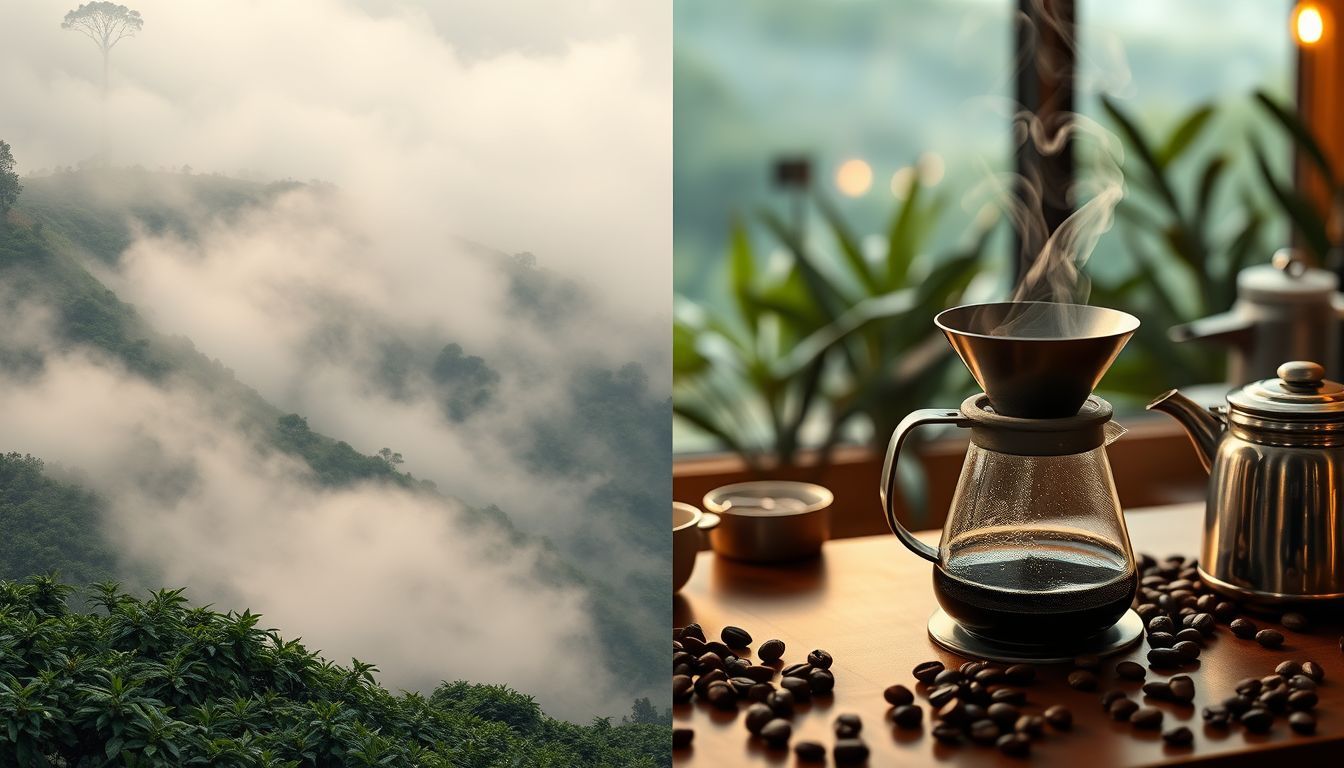
Quick Answer: Coffee microclimate brewing means adjusting your brewing method based on the specific environmental conditions (elevation, humidity, wind exposure, shade) where your coffee was grown. Coffees from misty valleys need gentler extraction (195-200°F), while wind-exposed beans require hotter water (200-205°F) to unlock their concentrated flavors.
There’s a moment during coffee cupping at home when you realize that the coffee in your spoon carries more than just flavor—it carries the memory of morning mists that clung to a particular hillside, the whisper of afternoon breezes that danced through specific rows of coffee trees, and the gentle persistence of seasonal rains that fell on just one corner of a farm. This is the profound influence of microclimate, those intimate pockets of weather that exist within larger climate zones, creating coffee that speaks not just of its region, but of its exact place in the world.
As I’ve traveled from farm to farm, cupping table to cupping table, I’ve come to understand that microclimate is perhaps the most nuanced and overlooked factor in coffee’s journey from seed to cup. It’s the difference between two lots grown just a few hundred meters apart, yet expressing entirely different personalities. And more importantly for us as home brewers, understanding coffee microclimate brewing can transform how we approach our daily ritual.
The Poetry of Place: Understanding Microclimates in Coffee
A microclimate is nature’s way of creating intimate spaces within larger environments. While a region might be classified as having a tropical highland climate, within that designation exist countless smaller climate pockets—each with its own personality, its own rhythm of temperature, humidity, wind patterns, and precipitation.
Understanding how microclimate affects coffee begins with recognizing these environmental variations. I remember walking through a single farm in the Antigua region of Guatemala with the farmer, Don Carlos, who pointed out how his coffee plants on the eastern slope of his property ripened two weeks earlier than those on the western slope, despite being at nearly identical elevations.
“The morning sun here,” he explained, touching a coffee cherry, “it wakes up differently than the afternoon sun over there.” This simple observation revealed the profound truth of microclimate: coffee doesn’t just grow in a place, it grows in a very specific version of that place.
Elements of Microclimate
Understanding how microclimate affects coffee requires examining several interconnected factors:
Topographical Influences: The shape of the land creates its own weather patterns. A small valley might trap cool air and morning mist, while a ridge might experience constant breezes that dry the coffee cherries more quickly during processing.
Canopy and Shade: The presence of shade trees, their species, density, and height all create unique light and temperature patterns throughout the day. A coffee plant growing under a dense canopy of Inga trees experiences a completely different daily rhythm than one growing under scattered Gravilea.
Water Sources: Proximity to streams, rivers, or even seasonal water flows creates humidity pockets and temperature moderation that can dramatically influence coffee development.
Soil Variations: Even within a single farm, soil composition can vary dramatically, affecting drainage, nutrient availability, and root development—all of which influence how the plant responds to its immediate climate.
Reading the Microclimate Story in Your Cup
When I cup coffees, I’m not just tasting flavor—I’m reading the autobiography that each microclimate has written into the beans. These stories reveal themselves in subtle but distinct ways:
| Microclimate Type | Flavor Signature | Body | Acidity |
|---|---|---|---|
| Morning Mist | Soft brightness, floral | Silky | Gentle |
| Wind-Exposed | Complex fruit, clarity | Firm | Vibrant |
| Protected Valley | Chocolate, nuts, earth | Rich | Moderate |
| Ridge Runner | Bright fruit | Medium | High |
The Morning Mist Signature
Coffees grown in areas that experience regular morning fog often develop what I call a “soft brightness”—acidity that’s present but gentle, wrapped in a silky body that speaks of slow, even ripening in cool, humid conditions. These coffees often benefit from brewing methods that honor their delicate nature.
The Wind-Kissed Character
Beans from plants that experience consistent breezes tend to develop more concentrated flavors and firmer body. The constant air movement stresses the plant just enough to encourage the production of more complex compounds, resulting in coffees with excellent clarity and definition.
The Valley Floor Richness
Coffees grown in protected valleys, where cool air settles and humidity lingers, often express deeper, more grounded flavors—chocolate, nuts, and earth tones that speak of the protected, nurturing environment in which they developed.
The Ridge Runner Brightness
Plants growing on exposed ridges, where they experience dramatic temperature swings and intense sunlight, often produce beans with vibrant acidity and complex fruit notes—the plant’s response to the challenging but invigorating conditions.
Cupping with Microclimate Awareness
When approaching coffee cupping at home, bring not just your palate but your understanding of the microclimate story each coffee might tell. This awareness has transformed how I evaluate and appreciate coffee:
💡 PRO TIP: Start building your microclimate awareness by cupping two coffees from the same region but different farms. Note differences in body, acidity, and aromatics—these often reveal microclimate variations.
The Setup: Honoring Origin Conditions
Through hundreds of professional cupping sessions, I’ve refined protocols that account for microclimate origins. For coffees from high-humidity microclimates, I might use slightly cooler water to preserve the delicate aromatics that developed in those misty conditions. For wind-exposed coffees, I might extend the steeping time slightly to fully extract the concentrated flavors.
Reading Between the Sips
During cupping, I pay attention to how flavors evolve as the coffee cools—this temperature journey often reveals microclimate influences. Coffees from stable microclimates tend to maintain consistent flavor profiles as they cool, while those from more variable conditions might reveal different notes at different temperatures.
The Aromatics Tell Tales
The fragrance and aroma stages of cupping become particularly revealing when viewed through a microclimate lens. Floral notes often indicate morning mist and gentle conditions, while intense fruit aromatics might suggest dramatic temperature swings or specific soil-climate interactions.
Coffee Microclimate Brewing: Translating Understanding to Home Methods
The real magic happens when we take this microclimate awareness from the cupping table to our home brewing setup. Understanding how microclimate influenced your coffee’s development allows you to make brewing decisions that honor and enhance those characteristics.
Brewing for Morning Mist Coffees
Characteristics: Soft acidity, silky body, delicate aromatics
Brewing Adaptations:
- Water Temperature: 195-200°F to preserve delicate compounds
- Grind Size: Medium-fine to encourage gentle extraction
- Brewing Method: Pour-over methods like V60 or Chemex that highlight clarity
- Timing: Slower, more controlled pours to match the coffee’s gentle nature
- Ratio: 1:16 to 1:17 to allow the subtle flavors to shine without overwhelming
If you’re looking for SCA-certified performance that handles delicate microclimate coffees well, the KRUPS Essential Brewer delivers consistent results in this crucial 195-200°F range.
I remember brewing a coffee from a misty valley in Costa Rica’s Tarrazú region. The first time I used my standard hot water and quick pour technique, the coffee tasted flat and muted.
When I dropped the temperature by 10 degrees and slowed my pour to match the patient rhythm of those morning mists, the coffee bloomed with jasmine aromatics and honey sweetness.
Brewing for Wind-Exposed Ridge Coffees
Characteristics: Concentrated flavors, firm body, bright acidity
Brewing Adaptations:
- Water Temperature: 200-205°F to fully extract concentrated compounds
- Grind Size: Medium to medium-coarse to prevent over-extraction
- Brewing Method: French press or AeroPress to capture full body
- Timing: Standard to slightly extended contact time
- Ratio: 1:15 to 1:16 to handle the intensity
A coffee from an exposed ridge in Ethiopia’s Yirgacheffe region taught me this lesson. Its concentrated flavors needed the full heat and extended contact time to properly develop, revealing layers of bergamot and stone fruit that lighter brewing couldn’t access. Professional pour-over coffee brewing setup with steam rising from fresh coffee grounds
Brewing for Protected Valley Coffees
Characteristics: Rich body, chocolate and nut notes, moderate acidity
Brewing Adaptations:
- Water Temperature: 200-203°F for balanced extraction
- Grind Size: Medium to capture both body and clarity
- Brewing Method: Clever Dripper or pour-over with longer contact time
- Timing: Extended steeping to develop richness
- Ratio: 1:15 to 1:16 for full body development
For valley-grown coffees that benefit from precise temperature control and even extraction, I often reach for the Technivorm Moccamaster. Its ability to maintain steady brewing temperature makes it ideal for developing the rich body these coffees are known for.
Brewing for Diverse Microclimate Blends
Characteristics: Complex, layered, changing flavor profile
Brewing Adaptations:
- Water Temperature: 200-202°F as a middle ground
- Grind Size: Medium for balanced extraction
- Brewing Method: Methods that allow for temperature variation like pour-over
- Timing: Variable pour speeds to extract different components
- Ratio: 1:16 as a starting point, adjusting based on dominant characteristics
Advanced Microclimate Brewing Techniques
Advanced coffee microclimate brewing techniques help you fine-tune extraction based on growing conditions.
Temperature Stepping
For coffees from highly variable microclimates, I sometimes use a temperature stepping technique—starting with cooler water to extract delicate compounds, then finishing with hotter water to pull out the more robust flavors. This mimics the daily temperature variations the coffee experienced during growth.
⚠️ IMPORTANT: Temperature stepping works best with medium-to-light roasts where microclimate characteristics remain prominent. Dark roasts often override these subtle differences.
Bloom Time Variations
The bloom time can be adjusted based on microclimate characteristics. Coffees from high-humidity environments often benefit from longer bloom times (45-60 seconds) to allow for proper degassing, while those from dry, windy conditions might need shorter blooms (30-45 seconds).
Grind Distribution Awareness
Microclimate influences can affect bean density and structure, which in turn affects how they grind. Investing in a quality grinder that allows precise adjustments becomes especially important when choosing grinders for microclimate-focused brewing. I’ve learned to pay attention to grind distribution and adjust accordingly—denser beans from challenging microclimates might need slightly coarser grinds to prevent over-extraction.
Seasonal Considerations: When Microclimate Meets Your Kitchen
Your own kitchen has its microclimate too, and this interacts with your coffee in fascinating ways:
Humidity Interactions
During humid summer months, I often adjust my brewing for coffees from dry microclimates, as the ambient humidity can affect extraction. Conversely, during dry winter months, coffees from humid microclimates might need slight adjustments to maintain their characteristic softness.
Temperature Stability
The temperature stability of your brewing environment affects how microclimate characteristics express themselves. A drafty kitchen might emphasize the bright, wind-kissed qualities of ridge-grown coffees, while a warm, stable environment might bring out the gentle qualities of valley-grown beans.
Building Your Microclimate Brewing Library
Over time, I’ve developed what I think of as a coffee microclimate brewing library matched to different environmental signatures. This isn’t about rigid rules but about developing sensitivity to the subtle ways that place expresses itself in coffee.
Keeping Brewing Notes
I recommend keeping notes not just on brewing parameters but on the microclimate story of each coffee. Note the farm’s elevation, aspect, shade coverage, and any other environmental details you can gather. Over time, patterns emerge that inform your brewing decisions. Coffee cupping session with tasting notes, multiple cups, and brewing journal on wooden table
Experimenting with Intention
When trying a new coffee, consider what you know about its growing conditions and let that guide your initial brewing approach. Having the right equipment for precise brewing control makes it easier to adapt your technique to each microclimate profile. Then experiment from that informed starting point rather than using a one-size-fits-all method.
The Dialogue Between Place and Palate
Ultimately, brewing coffee by origin and microclimate is about creating a dialogue between the place where the coffee grew and the place where you’re brewing it—a connection that mirrors traditional coffee ceremonies that honor coffee’s cultural and geographical origins. It’s about recognizing that every coffee carries the memory of its specific environment and that our role as brewers is to help that memory express itself fully.
This approach has taught me that brewing is not just about extraction and technique—it’s about translation. We’re translating the language of microclimate into the language of flavor, helping the coffee tell its story of morning mists and afternoon breezes, of protected valleys and wind-swept ridges.
Frequently Asked Questions About Microclimate Coffee Brewing
How does microclimate affect coffee flavor?
Microclimate influences coffee through temperature variations, humidity levels, wind exposure, and shade patterns. These factors determine how slowly cherries ripen, how concentrated sugars become, and what flavor compounds develop during growth.
What water temperature should I use for high-altitude coffee?
High-altitude coffees typically benefit from 200-205°F water to fully extract their dense, concentrated flavors that developed in cooler growing conditions.
Can I taste microclimate differences in coffee?
Yes. Coffees from misty microclimates show soft acidity and silky body, while ridge-grown coffees display bright acidity and concentrated flavors. Valley coffees tend toward chocolate and nut notes with rich body.
How do I find out my coffee’s microclimate information?
Look for detailed origin information on the coffee bag, including elevation, farm location, and processing notes. Quality roasters often provide microclimate details on their websites or in tasting notes. Don’t hesitate to ask your roaster directly about growing conditions.
What if I don’t know my coffee’s growing conditions?
Start by tasting the coffee and noting its characteristics. Soft, delicate flavors often indicate protected, misty conditions. Bright, concentrated flavors suggest wind-exposed or ridge locations. Rich, chocolatey profiles point to valley environments. Let these flavor cues guide your brewing adjustments.
Does roast level affect microclimate expression?
Yes. Light and medium roasts preserve microclimate characteristics much better than dark roasts. The longer roasting time in dark roasts tends to override the subtle terroir expressions that developed in the coffee’s specific growing environment.
Conclusion: Brewing with Reverence for Place
As I write this, I’m sipping a coffee from a small farm in Panama’s Boquete region, grown on a slope that faces the morning sun but is protected from afternoon winds by a stand of ancient trees. I brewed it with slightly cooler water and a gentle pour, honoring the protected, nurturing microclimate that shaped its development.
The result is a cup that tastes not just of coffee, but of place—of that specific hillside, that particular interplay of sun and shade, wind and shelter.
This is the gift of microclimate awareness: it transforms brewing from a mechanical process into an act of connection. When we understand how the intimate details of place shaped our coffee, we can brew with intention that honors that relationship. We become not just coffee drinkers but participants in a conversation that began in a specific patch of earth, under a particular sky, in the embrace of a unique microclimate. Misty coffee farm at sunrise with coffee plants on hillside and farmer holding ripe cherries
Your Next Step: Choose a single-origin coffee you’re currently brewing. Research its growing conditions (elevation, region, farm notes). Then try the microclimate-specific brewing approach that matches its profile. Note the differences in your brewing journal—you’re beginning your own microclimate brewing education.
Brewing coffee by origin creates a deeper connection to place. Every morning, as you prepare your coffee, you have the opportunity to complete this conversation—to take the whispered secrets of microclimate and give them voice through thoughtful brewing. In doing so, you’re not just making coffee; you’re celebrating the profound relationship between place and flavor, between the natural world and the cup in your hands.
The next time you taste your coffee, pause for a moment and listen. Can you hear the morning mist? Can you feel the afternoon breeze? Can you sense the protection of the valley or the challenge of the ridge? These are the voices of microclimate, speaking to you across continents and seasons, reminding you that every great cup of coffee is ultimately a love letter from a very specific place on earth.