Last month, I watched a friend dump four scoops of coffee into her French press, muttering about needing “rocket fuel” to get through her morning. The resulting brew was so bitter it could strip paint, yet somehow still felt weak and watery.
When I suggested that stronger coffee isn’t just about using more grounds, she looked at me like I’d suggested defying gravity. This scene plays out in kitchens worldwide every day: coffee drinkers confusing “more coffee” with “stronger coffee,” creating bitter, over-extracted disasters in pursuit of that elusive caffeine kick.
Quick Answer
The best coffee equipment for strong coffee uses pressure, extended extraction, or concentration to maximize TDS (Total Dissolved Solids). Top choices include espresso machines (9 bars pressure, 2-3% TDS), Moka pots (stovetop pressure, 2-3% TDS), AeroPress (manual pressure + immersion), and cold brew systems (time-based concentration, 3-5% TDS). Strong coffee requires proper extraction science, not just more coffee grounds.
The truth is, making genuinely strong coffee—coffee that’s both potent and delicious—requires understanding coffee extraction methods and choosing equipment designed to maximize strength without sacrificing flavor.
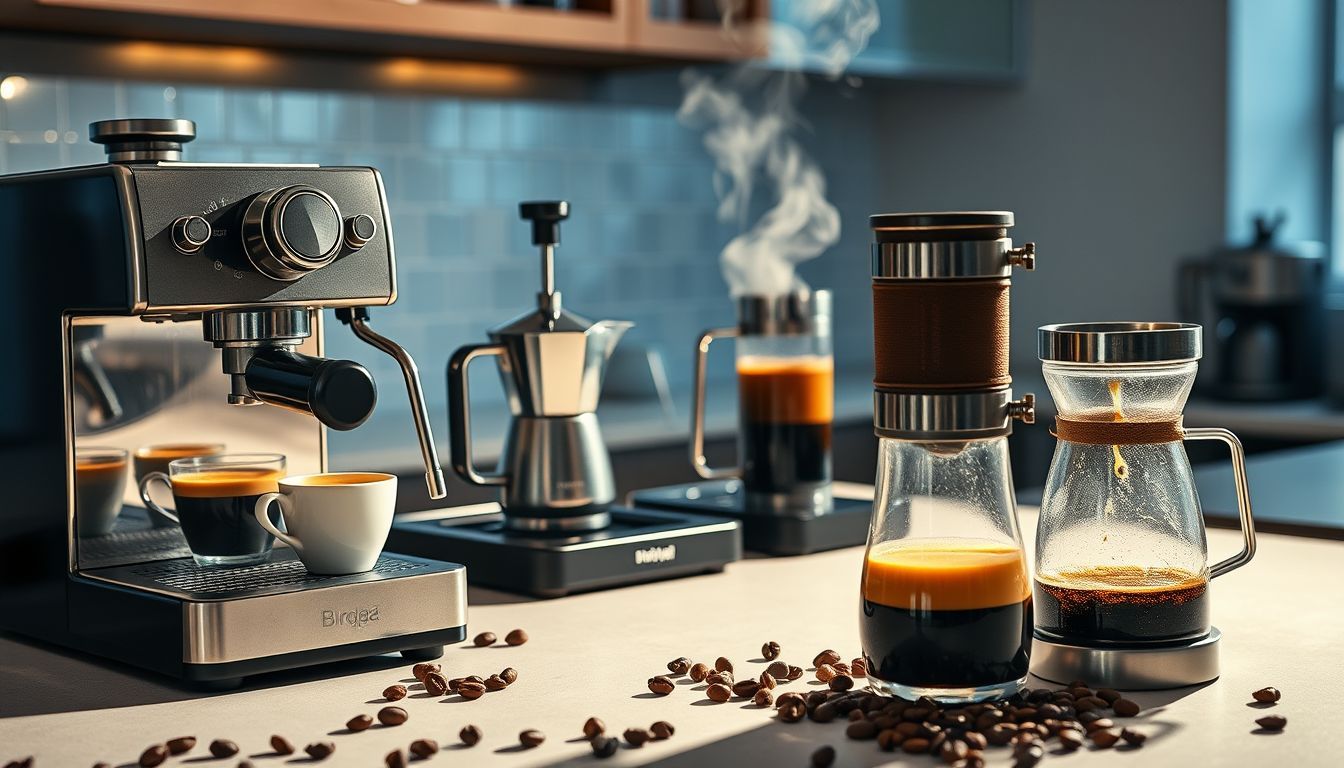
As someone who has tested everything from $50 Moka pots to $5,000 espresso machines in the quest for the perfect strong cup, I’ve learned that equipment choice dramatically affects your ability to create concentrated, flavorful coffee. The right tools can extract maximum strength from your beans while maintaining the complexity and balance that makes coffee enjoyable rather than just functional. Various coffee brewing equipment including espresso machine, moka pot, AeroPress, and cold brew maker arranged on wooden counter
Today, we’re exploring the best coffee equipment for strong coffee through better extraction, higher pressure, and more efficient brewing methods—not just the ability to dump more grounds into hot water.
Understanding Coffee Strength: Choosing the Best Coffee Equipment for Strong Coffee
Before diving into specific equipment, let’s clarify what “stronger coffee” actually means and why it matters for equipment selection.
Defining Coffee Strength
Total Dissolved Solids (TDS)
Coffee strength is scientifically measured as Total Dissolved Solids—the percentage of coffee compounds dissolved in your cup (according to the Specialty Coffee Association’s brewing standards). Typical coffee ranges from 1.2-1.5% TDS, while “strong” coffee measures 1.5-2.0% or higher.
Extraction Yield vs. Concentration
Extraction yield measures how much of the coffee bean’s soluble material you’ve dissolved (optimal range: 18-22%). Concentration measures how much water you use to dilute that extraction. Strong coffee can come from higher extraction, less dilution, or both.
Caffeine Content
While related to strength, caffeine content varies by bean type, roast level, and brewing method. Some strong-tasting coffees are actually lower in caffeine than lighter, “weaker” tasting brews.
The Equipment Connection
Understanding coffee extraction methods helps you choose equipment that affects strength through:
- Pressure: Higher pressure enables more complete extraction
- Contact time: Longer contact enables more thorough extraction
- Temperature control: Optimal temperatures maximize extraction efficiency
- Filtration: Different filters affect what compounds reach your cup
- Concentration ratio: Equipment that naturally produces concentrated coffee
High-Pressure Brewing: The Espresso Advantage
Espresso machines represent the gold standard for intense coffee equipment, using 9 bars of pressure to force water through finely ground coffee in 25–30 seconds.
Why Pressure Creates Strength
Forced Extraction
High pressure forces water through coffee grounds more completely than gravity-based methods, extracting more soluble compounds in less time.
Fine Grind Tolerance
Pressure brewing can handle very fine grinds that would clog other methods, increasing surface area and extraction potential.
Emulsification
Pressure creates emulsification of coffee oils, contributing to body and perceived strength.
Top Espresso Equipment for Strong Coffee
Entry-Level Powerhouses
Breville Bambino Plus ($300)
- 15-bar pump pressure
- Fast heat-up time
- Automatic milk frothing
- Compact footprint
Performance for strength: In my testing, the Bambino Plus consistently produced shots measuring 2.1-2.3% TDS with 30-second extractions—genuine espresso strength that rivals machines twice its price. The automatic features make consistent strong shots accessible to beginners. Espresso machine extracting concentrated coffee shot with thick crema into glass cup
Gaggia Classic Pro ($449)
- Commercial-style 58 mm portafilter
- Brass boiler for temperature stability
- Manual steam wand
- Modifiable for enthusiasts
Performance for strength: Traditional espresso machine design optimized for extraction. Manual control allows fine-tuning for maximum strength.
EspressoWorks All-In-One Espresso Machine with Milk Frother 7-Piece Set
For those seeking an all-in-one solution at an affordable price point, the EspressoWorks All-In-One Espresso Machine with Milk Frother 7-Piece Set provides a compact grinder-and-brewer package that delivers strong, consistent espresso shots and latte art capability right out of the box.
Mid-Range Masters
Rancilio Silvia ($800)
- Commercial-grade components
- Excellent temperature stability
- Professional steam wand (the same quality coffee equipment that makes you look like a pro barista)
- Built to last decades
Performance for strength: Produces espresso that rivals commercial machines. Temperature stability ensures consistent extraction for maximum strength.
Breville Dual Boiler ($1,500)
- Dual boiler system
- PID temperature control
- Pre-infusion capability
- Simultaneous brewing and steaming
Performance for strength: Advanced features enable precise control over extraction variables. Pre-infusion improves extraction uniformity for stronger, more balanced shots.
Manual Alternatives: Maximum Control
Flair Espresso Pro 2 ($285)
- Manual lever operation
- Pressure gauge for feedback
- No electricity required
- Portable design
Performance for strength: Manual pressure control allows for pressure profiling and maximum extraction. Produces espresso-strength coffee anywhere.
Cafelat Robot ($350)
- Dual-arm lever design
- Visual brewing process
- Easy cleaning and maintenance
- Consistent pressure delivery
Performance for strength: Lever design provides excellent pressure control. Visual brewing allows real-time adjustment for optimal extraction.
Moka Pots: Stovetop Concentration Champions
Moka pots use steam pressure to brew concentrated coffee that’s stronger than drip but not quite espresso strength.
The Moka Advantage
Natural Concentration
Moka pots produce coffee at roughly 2–3% TDS, significantly stronger than drip coffee’s 1.2–1.5%.
Pressure Brewing
Steam pressure (1–2 bars) enables better extraction than gravity-based methods.
No Electricity Required
Works on any heat source, making it perfect for travel or areas with unreliable power. If you’re looking for strong coffee without complex setup, check out our guide to the best coffee equipment for people who hate complicated gadgets—Moka pots consistently top that list.
Top Moka Pot Recommendations
Classic Options
Bialetti Moka Express (6-Cup)
- Original aluminum design
- Available in multiple sizes
- Proven reliability
- Iconic octagonal shape
Performance for strength: Produces consistently strong coffee with minimal technique required. The Bialetti Moka Express 6 Cup remains a timeless favorite for stovetop espresso enthusiasts.
Bialetti Venus Stainless Steel ($45–$65)
- Stainless steel construction
- Induction-compatible
- More durable than aluminum
- Easy cleaning
Performance for strength: Similar brewing performance to aluminum with improved durability and compatibility with all cooktops.
Premium Upgrades
Alessi 9090 ($200–$300)
- Designer aesthetics
- Excellent build quality
- Heat-resistant handle
- Precision engineering
Performance for strength: Superior build quality provides more consistent brewing and better heat distribution for optimal extraction.
French Press vs Moka Pot: Which Makes Stronger Coffee?
While both are popular brewing methods, the Moka pot produces significantly stronger coffee. French press typically yields 1.3-1.5% TDS through immersion extraction, while Moka pots reach 2-3% TDS through steam pressure. The Moka pot’s pressure-based extraction creates a more concentrated brew with fuller body, while French press offers more control over steeping time and produces a cleaner cup with less sediment. Choose Moka pots for maximum strength and espresso-like intensity, or French press when you want control over extraction and prefer a less concentrated cup.
Moka Pot Technique for Maximum Strength
Grind Size: Medium-fine, slightly coarser than espresso
Water Level: Fill to safety valve level
Heat Control: Medium heat to prevent over-extraction
Timing: Remove from heat when gurgling begins
AeroPress: Pressure and Immersion Combined
The AeroPress combines pressure brewing with immersion extraction, creating a unique method for strong, clean coffee.
AeroPress Strength Advantages
Pressure Extraction
Manual pressure (1–2 bars) improves extraction compared to gravity methods.
Immersion Brewing
Full immersion ensures complete saturation and extraction of coffee grounds.
Fine Filtration
Micro-filters remove sediment while allowing oils and fine particles that contribute to strength.
Versatile Ratios
Can brew concentrated coffee for dilution or drink straight for maximum strength.
AeroPress Equipment Options
AeroPress Original ($40)
- Classic design
- Includes filters and accessories
- Compact and portable
- Easy cleaning
Performance for strength: At just $40, the AeroPress Original Coffee Press is a prime example of budget coffee equipment that punches above its weight, producing espresso-style intensity with minimal investment.
AeroPress Go ($50)
- Travel-friendly design
- Built-in mug
- Same brewing capability
- More compact storage
Performance for strength: Identical brewing performance in a more portable package.
AeroPress Techniques for Stronger Coffee
Inverted Method
Flip the AeroPress upside down for longer steeping and stronger extraction.
Fine Grind
Use finer grinds than recommended for increased surface area.
Higher Ratios
Use more coffee relative to water for concentrated brewing.
Extended Steeping
Steep for 2–4 minutes before pressing for maximum extraction.
Cold Brew Concentrates: Time-Based Strength
Cold brew systems create strong coffee through extended extraction time rather than pressure or heat.
Cold Brew Strength Benefits
Concentration
Cold brew concentrate typically measures 3–5% TDS, making it the strongest coffee by concentration.
Low Acidity
Cold extraction reduces acid compounds, allowing for higher concentrations without bitterness.
Versatility
Concentrate can be diluted to desired strength or consumed straight.
Batch Brewing
Make large quantities of strong coffee concentrate for extended use.
Cold Brew Equipment for Strength
Immersion Systems
Toddy Cold Brew System ($40)
- Large capacity (12 cups concentrate)
- Felt filter for clean extraction
- Simple operation
- Proven design
Performance for strength: If you prefer immersion, the Toddy Cold Brew System is a widely respected option for making silky, potent cold brew concentrate.
OXO Cold Brew Coffee Maker ($50)
- Rainmaker water distribution
- Switch-activated filtering
- Compact design
- Easy cleaning
Performance for strength: Improved water distribution creates more uniform extraction for stronger, more consistent concentrate.
Slow Drip Systems
Hario Water Drop Coffee Dripper ($200)
- Adjustable drip rate
- Glass construction
- Visual brewing process
- Precise control
Performance for strength: Slow drip extraction creates incredibly concentrated coffee with unique flavor profiles.
Cold Brew Ratios for Maximum Strength
Standard Concentrate: 1:4 ratio (coffee to water)
Strong Concentrate: 1:3 ratio
Ultra-Strong: 1:2 ratio (drink with caution)
Grinder Considerations for Strong Coffee
The grinder is crucial for strong coffee because it determines extraction potential through particle size and distribution.
Grind Requirements for Strength
Consistency
Uniform particle size ensures even extraction and prevents over-extraction of fines.
Adjustability
Fine adjustment capability allows optimization for different brewing methods and strength preferences.
Capacity
Sufficient capacity for the coffee quantities needed for strong brewing methods.
Recommended Grinders for Strong Coffee
Baratza Encore Coffee Grinder
For most home baristas, the reliable Baratza Encore Coffee Grinder delivers consistent, uniform grinds across all brewing methods, from French press to espresso.
Eureka Mignon Specialita ($420)
- 55 mm flat burrs
- Stepless adjustment
- Low retention
- Quiet operation
Performance for strength: Exceptional grind quality enables maximum extraction for espresso and other pressure brewing methods.
Technique Tips for Maximum Strength
Universal Principles
Proper Ratios
Start with manufacturer recommendations, then adjust coffee quantity upward for strength.
Grind Optimization
Use the finest grind your brewing method can handle without over-extraction.
Water Temperature
Maintain optimal brewing temperature (195–205°F) for maximum extraction.
Contact Time
Extend contact time within reasonable limits for your brewing method.
Method-Specific Adjustments
Espresso: Focus on grind fineness and extraction time
Moka Pot: Control heat carefully to prevent over-extraction
AeroPress: Experiment with steeping time and pressure
Cold Brew: Adjust ratios and steeping time
French Press: Optimize grind size and steeping duration
Common Mistakes That Weaken Coffee
Over-Extraction Errors
Too Fine Grind
Excessively fine grinds can cause over-extraction and bitterness, making coffee taste weak despite high TDS.
Excessive Heat
Too-hot water extracts bitter compounds that mask strength perception.
Over-Steeping
Extended contact time beyond optimal ranges creates harsh flavors.
Under-Extraction Problems
Insufficient Contact Time
Rushing the brewing process prevents complete extraction.
Poor Water Distribution
Uneven saturation leaves some coffee under-extracted.
Inadequate Pressure
Insufficient pressure in pressure-based methods reduces extraction efficiency.
Frequently Asked Questions About Strong Coffee Equipment
What’s the difference between strong coffee and high caffeine?
Strong coffee refers to the concentration of dissolved coffee solids (TDS), which affects flavor intensity and body. High caffeine content is a separate measure that depends on bean type, roast level, and brewing time. A light roast drip coffee can have more caffeine than a dark roast espresso, even though the espresso tastes much stronger. For maximum caffeine and strength, choose light roast beans brewed with high-pressure or long-extraction methods.
Can you make strong coffee without an espresso machine?
Absolutely. Moka pots, AeroPress, and cold brew systems all produce coffee significantly stronger than standard drip brewing. Moka pots achieve 2-3% TDS through steam pressure, AeroPress combines manual pressure with immersion, and cold brew creates 3-5% TDS concentrate through extended extraction. Each offers a different flavor profile and level of convenience, but all deliver genuine strength without requiring expensive espresso equipment.
What coffee-to-water ratio makes the strongest coffee?
The strongest sustainable ratio depends on your brewing method. For cold brew concentrate, 1:3 or even 1:2 ratios create extremely strong coffee. For espresso, the standard 1:2 ratio (18g coffee to 36g water) produces maximum strength. For AeroPress, inverted method with 1:5 ratios yields concentrated results. However, simply adding more coffee doesn’t guarantee better extraction—you need proper grind size, water temperature, and contact time to avoid bitter over-extraction while maximizing strength.
How much does strong coffee equipment cost?
Strong coffee equipment spans a wide price range. Entry-level options like the AeroPress ($40) or basic Moka pots ($30-50) deliver excellent strength on a budget. Mid-range choices like the Breville Bambino Plus espresso machine ($300) or Toddy Cold Brew System ($40) offer more convenience and capacity. Premium espresso machines ($800-1,500+) provide commercial-grade control for those serious about extraction science. Your budget shouldn’t prevent you from making strong coffee—technique matters more than price.
Which method is easiest for beginners?
The Moka pot is the easiest strong coffee method for beginners. It requires minimal technique, no electricity, and produces consistently concentrated coffee with just medium heat and proper timing. Cold brew is a close second—simply combine coffee and water, wait 12-24 hours, and strain. AeroPress requires slightly more technique but offers more control. Espresso machines have the steepest learning curve but reward practice with unmatched strength and quality.
Conclusion: Strength Through Science, Not Brute Force
Creating stronger coffee isn’t about overwhelming your taste buds with caffeine and bitterness—it’s about maximizing extraction efficiency and concentration through proper equipment and technique. The best strong coffee balances intensity with flavor complexity, delivering the caffeine kick you need without sacrificing the nuanced flavors that make coffee enjoyable.
The best coffee equipment for strong coffee recommendations in this guide represent different approaches to achieving strength: pressure-based extraction for espresso machines and Moka pots, immersion concentration for AeroPress and French press, and time-based extraction for cold brew systems. Each method has its place depending on your preferences, budget, and lifestyle.
Remember that the most expensive equipment won’t automatically produce stronger coffee if you don’t understand the principles behind extraction. Start with proper technique using whatever equipment you have, then upgrade strategically based on your specific strength preferences and brewing habits. Flat lay comparison showing progression from basic to advanced coffee brewing equipment and tools
Most importantly, don’t confuse “more coffee grounds” with “stronger coffee.” The goal is efficient extraction that maximizes the desirable compounds while minimizing the harsh ones. With the right equipment and technique, you can create coffee that’s both powerfully strong and genuinely delicious.
Your Next Steps
- Assess your current setup: Can your grinder handle fine grinds? If not, start there—a quality grinder is the foundation for any strong coffee method.
- Choose your method: Espresso for classic strength, Moka pot for stovetop convenience, AeroPress for versatility, or cold brew for smoothness and batch production.
- Master technique first: Even the best equipment for strong coffee won’t perform without proper extraction fundamentals. Focus on grind size, water temperature, and timing before upgrading.
- Test and adjust: Use consistent ratios and make one change at a time until you dial in your perfect strength. Track your results to understand what works for your taste preferences.
What’s your preferred method for making strong coffee? Have you found equipment that consistently delivers the strength you’re looking for? Share your experience in the comments—I’m always curious about how to make stronger coffee and how different approaches work for different coffee drinkers.