Quick Answer
Traditional coffee harvesting rituals are ceremonial practices passed down through generations that combine spiritual, cultural, and agricultural elements during coffee cherry picking. These rituals, from Ethiopia’s sacred blessings to Indonesia’s giling basah method, shape the unique flavors and cultural significance of coffee worldwide. Modern adaptations integrate sustainable practices and technology while preserving the core spiritual connection between harvesters and the land.
The Influence of Traditional Coffee Harvesting Rituals Around the World and Their Modern Adaptations
In the heart of verdant landscapes, where the air is thick with the aroma of ripening cherries, ancient hands have long tended to the sacred coffee plants. These traditional coffee harvesting rituals, steeped in tradition and mysticism, have not only shaped the cultural tapestries of their regions but have also influenced modern coffee practices.
Let us embark on a journey through time and space, exploring the enchanting world of traditional coffee harvesting rituals and their contemporary adaptations.
Ethiopia: The Birthplace of Coffee’s Sacred Ceremony
The Traditional Harvest
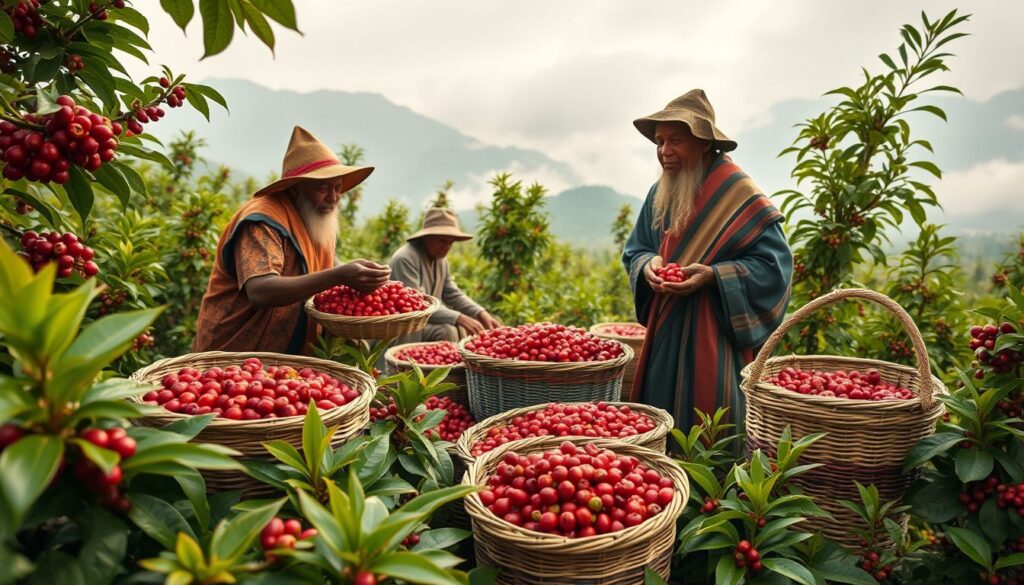
In Ethiopia, the cradle of coffee, the harvesting season is a time of communal reverence. Elders lead blessings, invoking spirits to ensure a bountiful yield. Harvesters, with hands seasoned by generations, selectively pluck only the ripest cherries, a testament to their deep connection with the land. This meticulous process is not merely agricultural but a spiritual act, intertwining the harvester’s soul with the essence of the bean. This selective handpicking represents one of the oldest traditional coffee harvesting rituals still practiced today.

According to Ethiopia’s Coffee and Tea Authority, over 15 million Ethiopians depend on coffee production, with approximately 95% of the country’s coffee still harvested using traditional selective handpicking methods.
The Ethiopian coffee ceremony is a profound cultural ritual that extends beyond the harvest. It involves roasting green coffee beans over an open flame, grinding them by hand, and brewing the coffee in a traditional clay pot called a jebena. This ceremony, often lasting several hours, is a symbol of hospitality and community, reinforcing social bonds and honoring ancestral traditions.
Modern Adaptations
While the core of Ethiopian coffee rituals remains intact, modernity has introduced several key changes:
- Cooperative farming models allowing smallholders to pool resources and access premium markets
- Sustainable certification programs (like Fair Trade and Rainforest Alliance) ensuring environmental stewardship
- Quality control training that preserves traditional selection methods while improving consistency
Indonesia: The Mystical Dance of Giling Basah
The Traditional Harvest
In the archipelago of Indonesia, particularly in Sumatra, the giling basah or ‘wet hulling’ method is a dance of elements. After handpicking, the cherries are pulped, and the beans, still cloaked in mucilage, are left to ferment overnight. The giling basah process is one of the most distinctive coffee harvesting methods in the world. This ritualistic process imparts a unique, earthy flavor to the beans, reflecting the mystical landscapes from which they hail.

Modern Adaptations
The giling basah method persists, but modern techniques have been woven into the fabric of tradition. Improved drying facilities and quality control measures have been introduced, enhancing the beans’ consistency without diminishing their distinctive character. This harmonious blend of old and new ensures that the spirit of Indonesian coffee continues to captivate palates worldwide.
Saudi Arabia: The Timeless Elegance of Khawlani Coffee
The Traditional Harvest
In the mountainous regions of Jazan, Al Baha, and Asir, the Khawlani coffee bean has been cultivated for over eight centuries. The harvest season, spanning from October to January, is a period of patience and devotion. Farmers handpick the cherries, which are then dried in shaded areas for three weeks, preserving their delicate flavors. This methodical process, unchanged for over 800 years, produces beans with 30% higher antioxidant content than conventionally processed coffee, according to research from King Abdulaziz University. It is a reflection of the region’s rich heritage and the deep respect for the bean.
Modern Adaptations
Recognizing the cultural significance of Khawlani coffee, efforts have been made to protect and promote its heritage. In 2022, UNESCO inscribed the knowledge and practices related to cultivating Khawlani coffee beans on its Intangible Cultural Heritage List. This recognition, now four years old, has led to measurable improvements in farmer income and heritage preservation. This acknowledgment has spurred initiatives to support local farmers, ensuring that traditional methods are preserved while providing economic opportunities in the modern market.
Rwanda: The Communal Spirit of Coffee Harvesting
The Traditional Harvest
In the rolling hills of Rwanda, coffee harvesting is a communal affair. During the main season from March to May, farmers handpick cherries, often carrying them in traditional baskets woven from banana leaves to washing stations. This collective effort not only ensures the quality of the beans but also strengthens community bonds, as stories and laughter are shared amidst the labor.

Modern Adaptations
The essence of communal harvesting remains, but modern advancements have been integrated. Cooperative associations have been established, providing farmers with training and access to international markets. These cooperatives emphasize quality control and sustainable practices, ensuring that Rwandan coffee maintains its esteemed reputation on the global stage.
Vietnam: The Rise of Mechanized Harvesting
The Traditional Harvest
Vietnam, the world’s largest producer of Robusta coffee, traditionally relied on manual harvesting methods. Farmers would handpick cherries, ensuring that only the ripest were selected, a labor-intensive process that required significant time and effort.
Modern Adaptations
While communal traditions thrive in Rwanda’s hills, Vietnam’s coffee industry took a dramatically different path toward modernization. To meet the demands of large-scale production, Vietnam has increasingly adopted mechanized harvesting techniques. By 2025, mechanized harvesting accounted for approximately 40% of Vietnam’s Robusta harvest, dramatically reducing labor costs by up to 60% compared to manual methods.
This shift has significantly increased efficiency and output. However, challenges remain in maintaining the quality associated with selective handpicking. Efforts are ongoing to balance the benefits of mechanization with the need for quality control, ensuring that Vietnamese coffee continues to thrive in the global market.
Colombia: Festivals Celebrating the Coffee Harvest
The Traditional Harvest
In Colombia, the annual coffee harvest is celebrated with festivals and parades. These events honor the hard work of farmers and the cultural significance of coffee in Colombian society. These festivals embody the coffee cultural traditions that make Colombian coffee unique. The harvest season is a time of joy and community, reflecting the deep connection between the people and their coffee heritage.
Modern Adaptations
While traditional celebrations continue, Colombia has embraced modern techniques to enhance coffee production. Innovations in processing and quality control have been implemented, ensuring that Colombian coffee remains competitive in the global market. Additionally, there is a growing emphasis on sustainable practices and fair trade, supporting the livelihoods of coffee farmers and preserving the environment.
☕ PRO TIP: Supporting Traditional Coffee Cultures
When buying coffee, these labels indicate support for traditional methods:
- Single-origin (traceable to specific regions)
- Fair Trade Certified (ensures fair wages for traditional farmers)
- Shade-grown (preserves traditional agroforestry)
- Heirloom varieties (maintains genetic diversity of ancient plants)
The Global Tapestry: Weaving Tradition with Innovation
Across the globe, traditional coffee harvesting rituals are threads in a rich tapestry of cultural heritage. While modern adaptations have introduced new techniques and technologies, the core essence of these rituals—the reverence for the bean, the land, and the community—remains unchanged. This harmonious blend of tradition and innovation ensures that the mystical journey of coffee, from cherry to cup, continues to enchant and inspire.
Whether you’re brewing at home with the right grinder or exploring ceremonial preparations, as we savor our daily brew, let us remember the ancient hands and sacred rituals that have shaped its journey. Understanding traditional coffee harvesting rituals helps us appreciate the cultural depth in every cup of specialty coffee. In each sip, we taste not just the flavors of the bean but the soul of the cultures that have nurtured it through time.
Ready to support these traditions? Look for coffee certifications like Fair Trade, Direct Trade, or Rainforest Alliance that ensure traditional harvesters receive fair compensation. Consider trying single-origin coffees from the regions featured here—each cup becomes a direct connection to centuries of cultural heritage. To honor these traditions in your own coffee ritual, explore how coffee ceremonies vary across cultures and bring their mindfulness to your daily routine.
Frequently Asked Questions
How long do traditional coffee harvesting rituals take?
Traditional coffee harvesting rituals vary significantly by region. The Ethiopian coffee ceremony can last 2-3 hours, while the actual harvest season typically spans 2-4 months depending on the region. In Saudi Arabia, the Khawlani coffee drying process alone takes three weeks as part of the traditional method.
Are traditional coffee harvesting methods more sustainable?
Yes, traditional methods are generally more sustainable. Selective handpicking reduces waste by only harvesting ripe cherries, and traditional shade-grown methods preserve biodiversity. These practices often require fewer chemical inputs and maintain soil health better than industrial farming methods.
Which countries still practice traditional coffee harvesting?
Ethiopia, Rwanda, Colombia, parts of Indonesia, and Saudi Arabia maintain strong traditional harvesting practices. Approximately 95% of Ethiopian coffee is still harvested using traditional selective handpicking methods, while countries like Vietnam have shifted toward mechanization for efficiency.
How do traditional methods affect coffee flavor?
Traditional methods significantly impact flavor profiles. Selective handpicking ensures only ripe cherries are processed, creating cleaner, more consistent flavors. Traditional processing methods like Indonesia’s giling basah create distinctive earthy notes, while Ethiopian sun-drying produces bright, fruity characteristics that cannot be replicated by industrial methods.
Leave a Comment