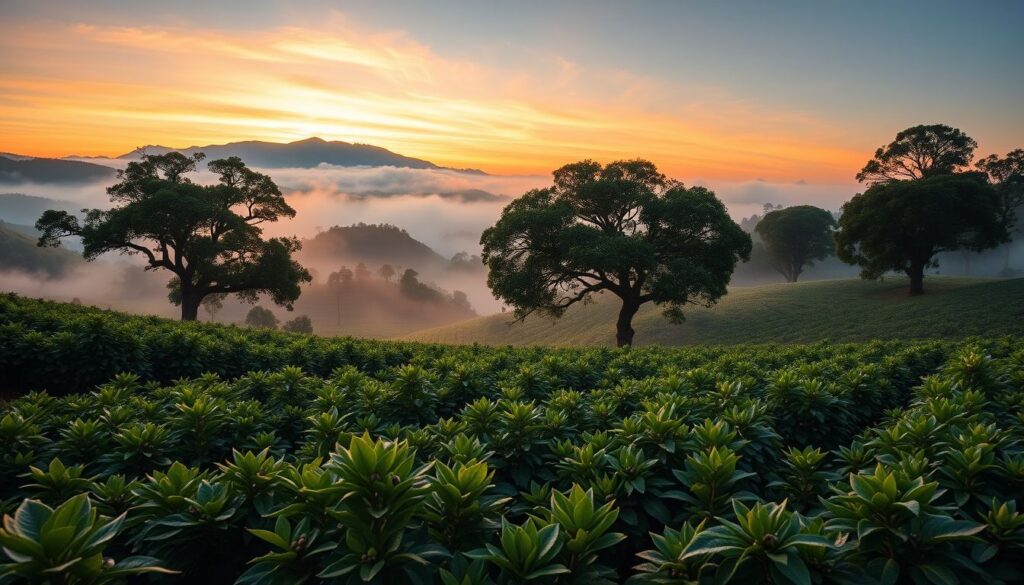
Quick Answer: Climate effects on coffee include temperature variations that control bean ripening speed, rainfall patterns that affect flavor balance, altitude that determines density and complexity, and sunlight exposure that influences sugar development. Home brewers can adapt by matching brewing methods to these climate-influenced characteristics—using pour-over for high-altitude beans with bright acidity, French press for fuller-bodied low-elevation coffees, and espresso to highlight natural sweetness.
The Influence of Local Climate Patterns on Coffee Bean Development and How Home Brewers Can Adapt Their Techniques
In the quietude of dawn, as the first light caresses the earth, a ritual unfolds in countless homes—a cup of coffee, steaming and fragrant, cradled between hands seeking warmth and wakefulness.
But have you ever wondered why your Ethiopian Yirgacheffe tastes so different from your Colombian Supremo—even when brewed identically? The answer lies thousands of miles away, in the specific climate conditions where each bean developed. Yet, this humble brew carries within it the whispers of distant lands, the stories of sun and rain, of soil and wind. Each bean is a testament to the climate that nurtured it, a silent witness to the rhythms of nature.
How Climate Shapes Coffee Bean Development
Climate effects on coffee are profound, shaping everything from bean density to flavor complexity. This cherished elixir carries the signature of its growing environment in every sip. The interplay of temperature, rainfall, altitude, and sunlight orchestrates the symphony of flavors that each bean embodies.
Temperature’s Embrace
The warmth of the sun accelerates the ripening of coffee cherries, leading to beans that may lack depth, their flavors hurried and undeveloped. Conversely, cooler climes slow this process, allowing sugars to develop more fully, resulting in a cup that sings with complexity and sweetness. Studies show that arabica coffee temperature requirements sit between 59-75°F (15-24°C), with optimal flavor development occurring at the cooler end of this range. The delicate Arabica variety, in particular, thrives in cooler temperatures, where its nuanced flavors can flourish.
Rainfall’s Rhythm
Rain, the lifeblood of the land, dictates the growth cycles of coffee plants. Consistent, gentle rains nurture steady development, while erratic patterns can disrupt flowering and fruiting, leading to uneven ripening. Regions blessed with well-distributed rainfall often produce beans with balanced acidity and body, a harmonious reflection of their environment.
Altitude’s Ascent
As one ascends to higher elevations, the air grows thinner, the temperatures cooler. Coffee grown in these lofty realms tends to mature slowly, a patient journey that culminates in beans of remarkable density and flavor complexity. For reference, Ethiopian Yirgacheffe coffees grown at 5,800-6,600 feet produce distinctly different flavor profiles than Colombian beans from 4,000-5,000 feet—even when processed identically. The high-altitude coffees of Ethiopia and Colombia are celebrated for their bright acidity and intricate taste profiles, a tribute to the heights at which they are cultivated.
Sunlight’s Caress
The dappled light filtering through the canopy of shade trees creates a microclimate that protects coffee plants from the harshness of direct sun. This gentle illumination fosters a gradual maturation, enhancing the development of sugars and acids within the beans. These microclimates created by shade cover can vary dramatically even within the same farm, affecting final cup quality. Shade-grown coffees often exhibit a refined sweetness and a delicate balance, a testament to the nurturing embrace of their environment.

The Impact of Climate Change
The delicate balance between coffee and climate is increasingly threatened by the specter of climate change. Rising temperatures and shifting weather patterns disrupt traditional growing regions, challenging farmers and altering the very essence of the beans we cherish. Understanding climate effects on coffee helps home brewers make informed choices about bean selection and brewing techniques.
Climate change disrupts coffee production in two critical ways:
- Increased Pests and Diseases: Warmer climates have expanded the range of pests like the coffee berry borer, a tiny beetle that can devastate crops. Diseases such as coffee leaf rust thrive in these new conditions, posing significant threats to yields and quality. (climate.gov)
- Shifting Growing Regions: By 2050, rising temperatures could reduce suitable coffee-growing land by up to 50% in key regions like Brazil and Central America, according to climate researchers. As traditional coffee-growing areas become less suitable, farmers must seek higher altitudes or different latitudes, disrupting established practices and communities.

Visual comparison of coffee beans from high-altitude and low-elevation regions showing differences in appearance and density on a wooden surface (dabov.us)
Coffee Characteristics by Climate: A Quick Reference
| Climate Factor | Effect on Beans | Best Brewing Method |
|---|---|---|
| High altitude, cool temps | Bright acidity, complex flavors | Pour-over, V60 |
| Low elevation, warm temps | Full body, earthy notes | French press, cold brew |
| Consistent rainfall | Balanced sweetness | Espresso, AeroPress |
| Shade-grown | Delicate, refined sweetness | Pour-over, Chemex |
Adapting Brewing Techniques to Climate-Influenced Beans
For home brewers, understanding the climatic origins of coffee beans allows you to refine your home brewing techniques to honor their unique characteristics.
Embracing Acidity
Beans from high-altitude regions often possess a bright acidity. To highlight this, consider brewing methods that preserve these vibrant notes. Pour-over techniques, with their precise control over extraction, can accentuate the crispness inherent in these beans. In my home brewing experiments, I’ve found that high-altitude Ethiopian beans shine brightest when brewed with water just off boil (around 200°F), which preserves their delicate floral notes.
Balancing Body
Coffees from lower elevations or warmer climates may exhibit a fuller body and deeper, earthier flavors. Brewing methods like the French press, which allow more oils and fine particles into the cup, can enhance these rich profiles, offering a satisfying depth. I recommend starting with a 1:15 coffee-to-water ratio for these fuller-bodied beans—slightly stronger than the standard 1:17—to fully appreciate their depth.
Highlighting Sweetness
Beans nurtured under consistent rainfall and moderate temperatures often develop pronounced sweetness. Espresso brewing, with its concentrated extraction, can amplify these sugary notes—machines like the Bosch 300 Series offer the temperature stability needed to consistently highlight natural sweetness in climate-influenced beans, creating a cup that resonates with natural sweetness.
Adjusting to Roast Profiles
Climate influences not only coffee bean development but also how beans respond to roasting. Beans from different climates may require adjustments in roasting time and temperature to unlock their full potential. As a home brewer, selecting beans roasted to complement their climatic origins can elevate your coffee experience and help you create café-quality drinks at home.
Equipment Considerations for Climate-Adapted Brewing
Adapting your home brewing techniques to climate-influenced beans starts with proper equipment. Investing in quality grinders matched to your brewing method ensures you can extract the nuanced flavors that different climates produce. A burr grinder with consistent particle size is especially important for highlighting the delicate notes in high-altitude beans.
For those serious about extracting every nuance from climate-influenced beans, the Technivorm Moccamaster maintains precise water temperature throughout the brew cycle—critical for consistent extraction of complex high-altitude coffee flavors.

Troubleshooting Common Issues with Climate-Influenced Beans
Problem: High-altitude beans taste sour or sharp
Solution: Lower your water temperature to 195-200°F and extend extraction time slightly to balance acidity with sweetness.
Problem: Low-elevation beans taste flat or muddy
Solution: Use a coarser grind and shorter brew time to emphasize the inherent body without over-extracting bitter compounds.
Problem: Shade-grown beans seem weak
Solution: Increase your coffee-to-water ratio by 10-15% to match the delicate flavor intensity these beans naturally possess.
Frequently Asked Questions About Climate and Coffee
How does temperature affect coffee bean development?
Temperature directly influences ripening speed and sugar development in coffee beans. Cooler temperatures slow maturation, allowing more complex sugars and acids to develop, resulting in brighter, more nuanced flavors. Warmer temperatures accelerate ripening, often producing beans with fuller body but less complexity.
What brewing method works best for high-altitude coffee?
Pour-over methods like V60 or Chemex work best for high-altitude coffees because they preserve the bright acidity and delicate flavors these beans develop. The controlled extraction highlights the complexity that slow maturation at high elevations creates.
Can climate change affect the taste of my coffee?
Yes, climate change directly impacts coffee flavor profiles by altering growing conditions. Rising temperatures force farms to higher altitudes, change ripening patterns, and increase pest pressure—all of which affect the final taste characteristics of your beans.
A Mindful Sip
Your Next Steps as a Climate-Conscious Home Brewer:
- Ask your roaster about the origin climate of your beans
- Experiment with brewing parameters based on altitude and growing conditions
- Keep tasting notes that record how different climates translate to your cup
- Consider supporting farmers adapting to climate change through direct-trade coffees
Each cup of coffee is a journey—a voyage through the climates that shaped its beans, a narrative of the earth’s diversity. By understanding and adapting to these climatic influences, home brewers can transform their daily ritual into an act of mindfulness and appreciation. In every sip, we can taste the sunlit hills, the misty mountains, the rhythmic rains—a symphony of nature captured in a humble cup.
As we cradle our mugs, let us remember the delicate dance between coffee and climate, and honor it with every brew we craft.
Leave a Comment