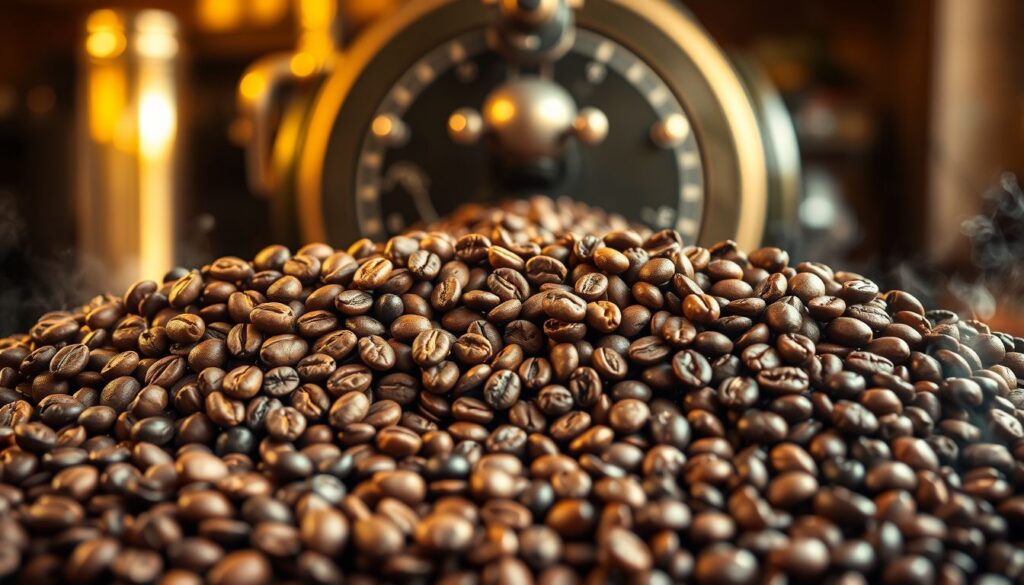
In the hushed cathedral of a roastery at dawn, something magical unfolds. Green coffee beans—dense, grassy, and holding their secrets close—tumble into the roasting drum. What happens next is nothing short of alchemy: heat becomes the artist, time becomes the canvas, and the roaster becomes the conductor of a symphony written in crackling sounds, aromatic releases, and color transformations that span from pale gold to deep mahogany.
I’ve stood beside countless roasters, watching their faces illuminated by the glow of the sight glass, listening as they interpret the language of the beans. Each of the major coffee roast levels tells a different story, reveals different truths about the coffee’s origin, and offers different gifts to those who drink it. Understanding coffee roast levels isn’t just about preference—it’s about unlocking the full potential of every bean that has traveled from distant mountains to your morning cup. Each of the major coffee roast levels reveals different characteristics and flavors hidden within the bean.
The Coffee Roasting Process: Understanding Temperature and Time
The Green Bean’s Transformation
Before we explore the spectrum of roast levels, we must understand what happens inside that roasting drum. Green coffee beans are living libraries, containing over 800 aromatic compounds and hundreds of other chemical compounds that will transform under heat. Sugars caramelize, acids develop and diminish, oils migrate, and cellular structures break down and rebuild in entirely new configurations.
The roasting process is a carefully controlled application of heat over time, typically lasting between 8 and 20 minutes depending on the desired outcome. Whether you’re interested in creating your own roast profiles at home with basic equipment or understanding commercial roasting, this timeline is fundamental to coffee development. Understanding the different types of coffee roasts and the coffee roasting process timeline helps you appreciate why light roast vs dark roast creates such dramatically different cups.
During this time, the beans undergo dramatic physical and chemical changes that determine everything from color and aroma to flavor and body.
The Language of Cracks
Roasters navigate by sound as much as sight. Two distinct auditory landmarks guide the journey: first crack and second crack. These aren’t arbitrary markers—they represent fundamental structural changes within the bean.
First crack occurs when the beans have absorbed enough heat energy to cause their cellular structure to rupture audibly. It sounds like popcorn popping, a rapid-fire series of snaps that signals the beans have entered the realm of true coffee. This typically happens around 385–400°F (196–204°C).
Second crack is quieter, more subtle—a gentle crackling that occurs as the bean’s structure continues to break down, oils begin to migrate to the surface, and the roast enters darker territory. This usually occurs around 435–445°F (224–229°C).
Between, before, and after these cracks lies the entire spectrum of roast levels, each offering its own interpretation of the bean’s potential.

Light Roasts: Preserving the Origin’s Voice
The Delicate Dance of Light Roasting
Light roasts are like watercolor paintings—delicate, nuanced, and requiring a gentle hand. These roasts typically end just at or slightly after first crack, preserving much of the bean’s original character while developing enough to create recognizable coffee flavors.
When I cup a light roast, I’m transported back to the origin. The terroir speaks clearly—the floral notes of an Ethiopian Yirgacheffe, the wine-like acidity of a Kenyan AA, the green apple brightness of a Costa Rican honey process. Light roasts are windows into the soul of the coffee’s birthplace.
Flavor Profile and Characteristics
In my experience cupping hundreds of light roasts, the retained high acidity—that bright, lively quality that makes your mouth water and your palate sing—is their defining characteristic. The body tends to be lighter, more tea-like, allowing subtle flavors to dance on your tongue without being overwhelmed by roast-derived characteristics.
These roasts often showcase:
- Pronounced acidity and brightness
- Floral and fruity notes
- Complex aromatics
- Light to medium body
- Minimal oil development
- Higher caffeine content (light roasts retain approximately 1.37% caffeine by weight compared to 1.31% for dark roasts, according to research published in the Journal of Medicinal Food)
The bean’s surface remains dry, with little to no visible oil, and the color ranges from light brown to medium brown with no oil sheen.

Brewing Considerations for Light Roasts
Light roasts can be finicky—they require proper extraction to avoid sourness or under-development. Pour-over methods excel with light roasts, and having the right equipment makes all the difference when extracting these delicate profiles. Other filter methods that allow for precise control over extraction time and water temperature also work beautifully.
These roasts often benefit from slightly hotter water (200–205°F) and longer extraction times to fully develop their potential.
Medium Roasts: The Harmonious Middle Ground
Finding Balance in the Middle
Medium roasts represent coffee’s sweet spot for many drinkers—a harmonious balance between origin character and roast development. These roasts typically develop well past first crack but stop before second crack begins, creating a coffee that speaks both of its birthplace and its transformation.
In medium roasts, I find poetry in balance. The origin’s voice remains clear but is now accompanied by the warm harmonies of caramelization. Sugars have had time to develop, acids have mellowed slightly, and body has increased without overwhelming the coffee’s inherent character.
The Spectrum of Medium
Medium roasts actually encompass a range of development levels:
Medium-Light (American Roast): Just past first crack, these roasts maintain much of the origin character while adding subtle caramelization.
True Medium (City Roast): Well-developed past first crack, these roasts show balanced acidity and body with noticeable sweetness from caramelized sugars.
Medium-Dark (Full City): Approaching second crack, these roasts show decreased acidity, increased body, and more pronounced roast character while still maintaining origin notes.
Flavor Development in Medium Roasts
Medium roasts offer:
- Balanced acidity and body
- Caramelized sugar sweetness
- Chocolate and nut notes
- Reduced brightness compared to light roasts
- Increased richness and mouthfeel
- Versatility across brewing methods
The beans show a rich brown color, often with a slight oil sheen on medium-dark examples.
Brewing Versatility
Medium roasts are the chameleons of the coffee world—they adapt well to almost any brewing method. Whether you prefer espresso, drip coffee, or French press, a medium roast shines. For consistent daily brewing, the Keurig K-Duo Coffee Maker offers versatility for both single cups and full carafes, perfect for medium roasts.
Dark Roasts: Embracing the Roaster’s Art
The Bold Territory of Dark Roasting
Dark roasts venture into territory where the roaster’s art becomes as important as the farmer’s craft. These roasts push well into or past second crack, creating coffees where roast character dominates while origin notes take a supporting role.
I’ve watched skilled roasters carefully monitor temperature curves during dark roasting, often pulling beans within a 15-second window to avoid the line between bold and burnt. There’s a misconception that dark roasting is somehow inferior or masks poor-quality beans. In reality, dark roasting is an art form that requires skill, timing, and an understanding of how different origins respond to extended heat application.
Dark Roast Characteristics
Dark roasts typically offer:
- Low acidity
- Full, heavy body
- Pronounced roast flavors (smoke, char, caramel)
- Minimal origin character
- Visible surface oils
- Lower caffeine content
- Bitter-sweet balance
By the time you reach these levels, it’s common for oils to migrate to the bean’s surface, signaling a roast that has fully embraced the bold end of the spectrum.
Brewing Dark Roasts
Dark roasts excel in applications that emphasize body and richness. Drip coffee makers handle dark roasts beautifully—the KRUPS Essential Brewer delivers SCA-certified brewing that brings out dark roasts’ syrupy richness without bitterness.
French press, moka pot, and cold brew also work beautifully with dark roasts, as these methods emphasize body and richness while minimizing any harsh edges that might develop during extended roasting.

How Commercial and Specialty Roasters Approach Roast Levels
Commercial roasters often prioritize consistency and cost-effectiveness, frequently favoring darker roasts that mask variations between crop years. Specialty roasters typically use lighter roasts to showcase the unique characteristics of single-origin beans and precise processing methods. As specialty coffee culture continues to evolve in 2026, we’re seeing increased appreciation for the full spectrum of roast profiles, with consumers becoming more adventurous in exploring the various types of coffee roasts.
Matching Coffee Roast Levels to Bean Origins
Origin-Roast Synergy
Not all coffees respond equally to different roast levels. Understanding how various origins perform at different roast degrees is crucial for maximizing each coffee’s potential.
Ethiopian Coffees: Often shine at light to medium roasts where their floral and fruity characteristics can express fully.
Central American Coffees: Versatile across the roast spectrum, these coffees often show chocolate and nut notes in medium roasts while maintaining enough structure to handle darker roasting.
Brazilian Coffees: Excel at medium to dark roasts where their natural sweetness and full body can develop fully.
Indonesian Coffees: Often benefit from medium-dark to dark roasting, which complements their earthy, herbal characteristics and full body.
Processing Method Considerations
Processing methods also influence optimal roast levels:
Washed Coffees: Typically showcase their clean, bright characteristics best at light to medium roasts.
Natural Process Coffees: Can handle a wider range of roast levels, with their fruit-forward character evolving into wine-like complexity at medium roasts and rich sweetness at darker levels.
Honey Process Coffees: Often peak at medium roasts where their inherent sweetness balances beautifully with developed caramelization.
Common Roast Level Mistakes and How to Avoid Them
Mistake #1: Judging roast level by color alone
Bean density and origin affect color—a light roast of a dense Ethiopian bean may appear darker than a medium roast of a less dense Brazilian bean.
Mistake #2: Assuming darker = stronger
Darkness refers to roast level, not strength. Strength comes from brew ratio and extraction.
Mistake #3: Storing oily dark roasts improperly
Those surface oils turn rancid quickly. Store dark roasts in an airtight container away from light and use within two weeks of roasting. For optimal freshness, understand how roast dates affect your coffee’s peak flavor window.
Mistake #4: Using the wrong grind size
Different roast levels require different grind sizes for optimal extraction. Light roasts often need slightly finer grinds than dark roasts to achieve proper extraction.
Personal Preference and Palate Development
Finding Your Roast Profile
Developing your roast preference is a journey of exploration. Start by tasting the same origin at different roast levels to understand how roasting affects flavor. Notice how a bright, floral Ethiopian coffee transforms as it moves from light to medium to dark roasting.
Seasonal Considerations
Many coffee lovers find their roast preferences shifting with the seasons. Light, bright roasts might appeal during warm summer months, while rich, full-bodied dark roasts provide comfort during winter’s chill.
Your Next Steps: Exploring Roast Levels
Start your journey by ordering the same coffee at three different roast levels. Brew them identically and taste them side-by-side. Notice how acidity changes, how body develops, and how origin characteristics either shine through or take a back seat to roast character.
Keep a tasting journal noting which roast levels appeal to you with different brewing methods and at different times of day. Your preferences will evolve as your palate develops.
Frequently Asked Questions About Coffee Roast Levels
What’s the difference between light roast vs dark roast?
Light roasts preserve origin flavors with high acidity and fruity notes, while dark roasts emphasize roasted flavors with low acidity and full body. Light roasts stop at or just after first crack, while dark roasts continue well into or past second crack.
Do dark roasts have more caffeine?
No, light roasts actually contain slightly more caffeine per bean. The roasting process reduces caffeine content, so lighter roasts retain more of the original caffeine.
Which roast level is healthiest?
Light roasts retain more antioxidants and chlorogenic acid, though all roast levels offer health benefits. The difference is relatively modest, so choose based on your taste preference.
How long does the coffee roasting process take?
Most roasting takes 8-20 minutes, with light roasts typically shorter (8-12 minutes) and dark roasts longer (14-20 minutes). The exact time depends on the roaster, batch size, and desired roast profile.
Conclusion: Embracing the Full Spectrum
As I finish writing this, the aroma of a medium roast fills my kitchen—a Colombian coffee that speaks of mountain sunshine and careful processing, now transformed by heat into something entirely new yet still recognizably itself. This is the magic of roasting: the ability to unlock different aspects of the same bean through various coffee roast levels, to tell different stories from the same origin.
Whether you’re starting your exploration of coffee roast levels with pour-over precision, refining your brewing technique, or chasing the darkest depths of roast development, the path you choose is uniquely yours. Taste widely, compare thoughtfully, and remember that every roast level represents someone’s careful attention to the ancient alchemy of transforming green seeds into liquid poetry.
In the end, the best roast level is the one that brings you joy in that quiet moment when you lift the cup to your lips and taste not just coffee, but the culmination of countless decisions. Enjoy the journey.
Leave a Comment